Filter By Tags
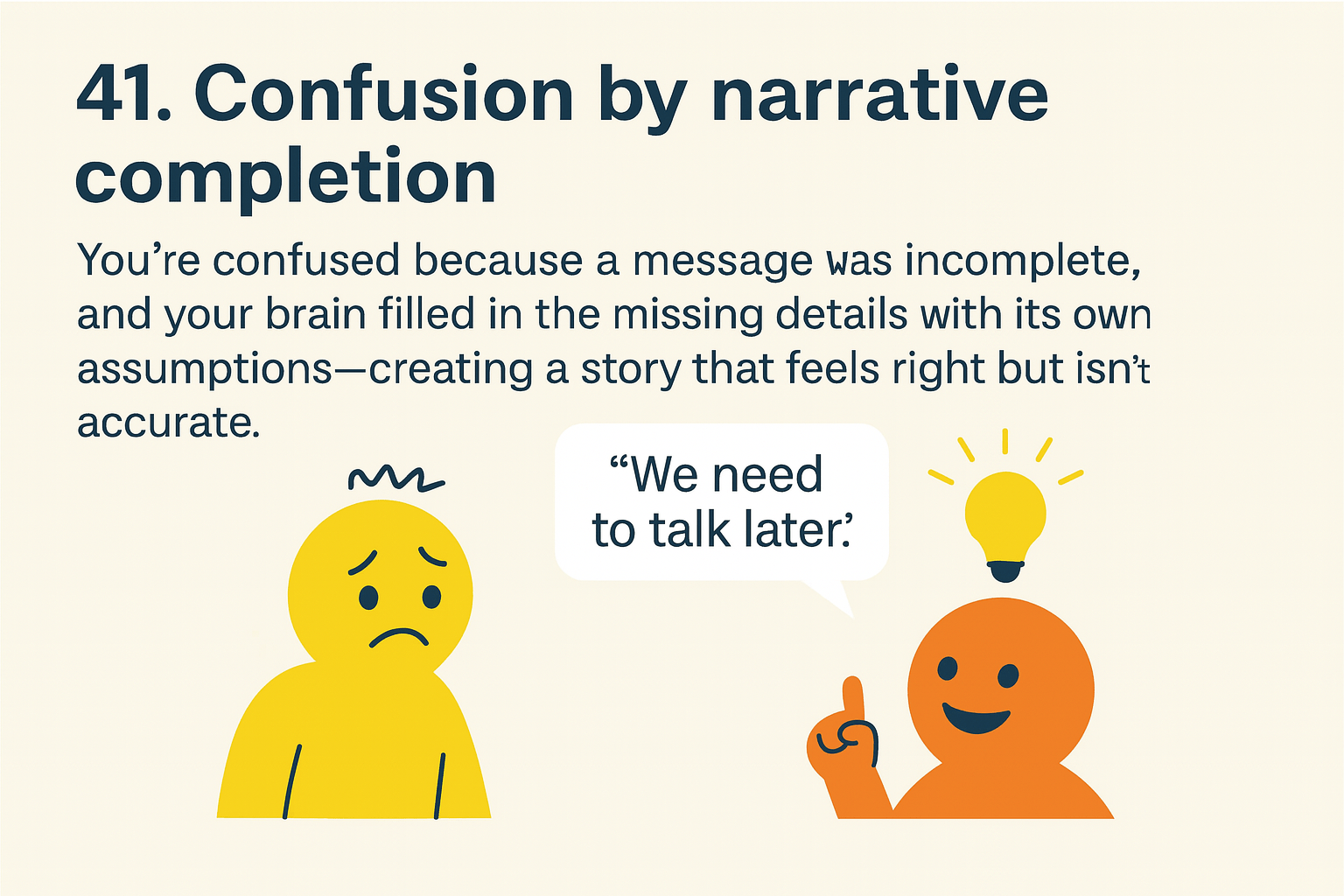
You’re confused because a message was incomplete, and your brain filled in the missing details with its own assumptions—creating a story that feels right but isn’t accurate.
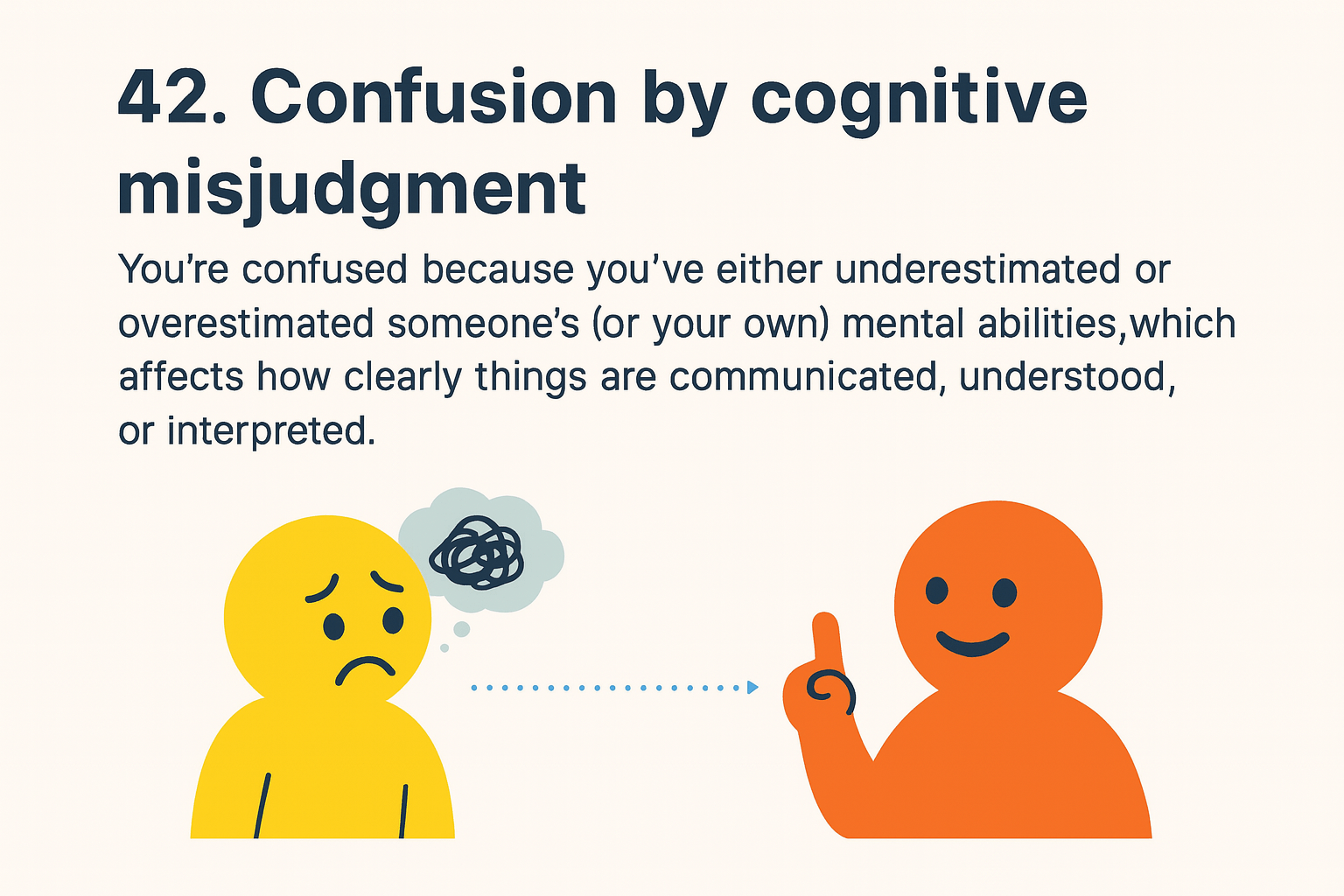
You’re confused because you’ve either underestimated or overestimated someone’s (or your own) mental abilities, which affects how clearly things are communicated, understood, or interpreted.
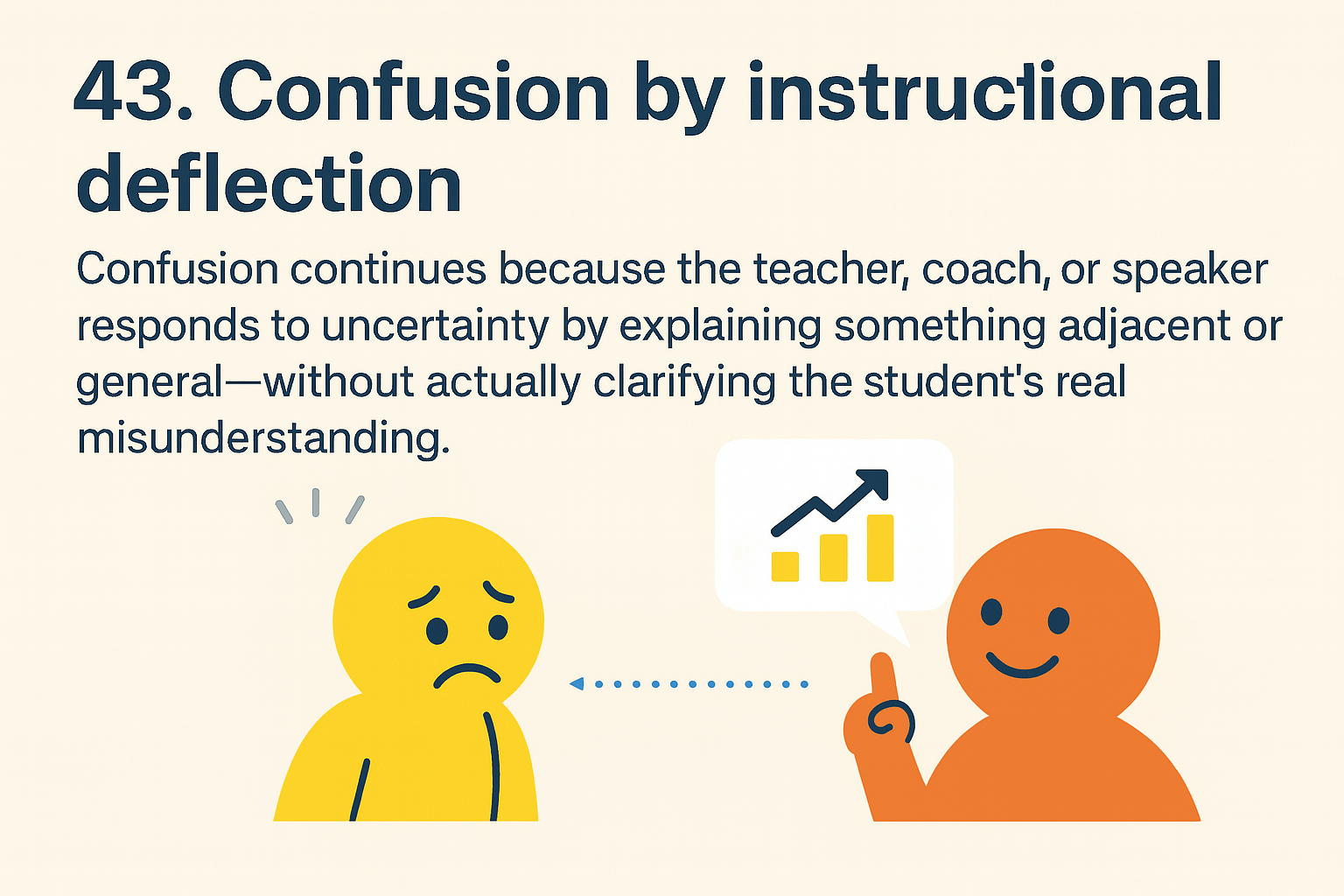
Confusion continues because the teacher, coach, or speaker responds to uncertainty by explaining something adjacent or general—without actually clarifying the student’s real misunderstanding.
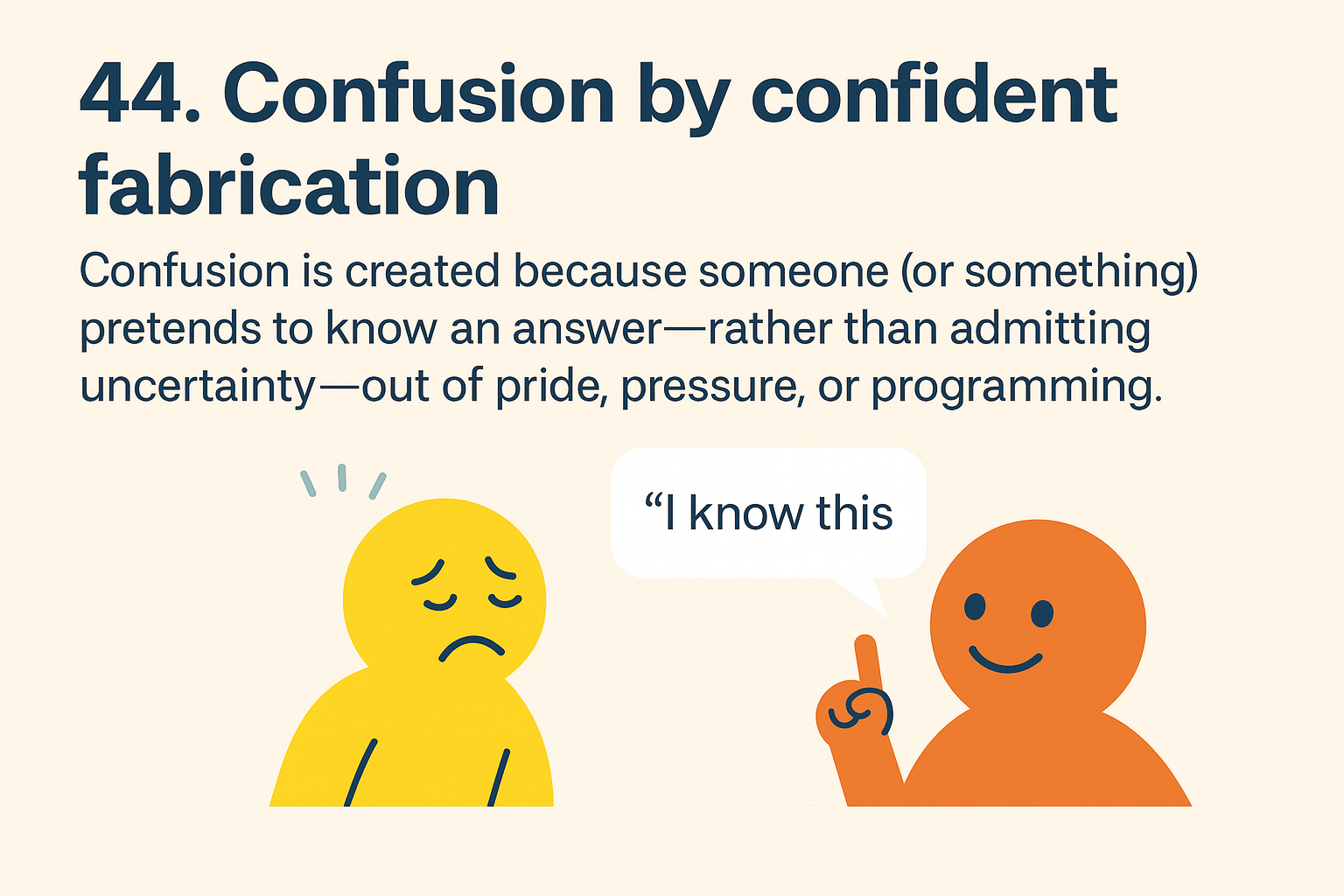
Confusion is created because someone (or something) pretends to know an answer—rather than admitting uncertainty—out of pride, pressure, or programming.
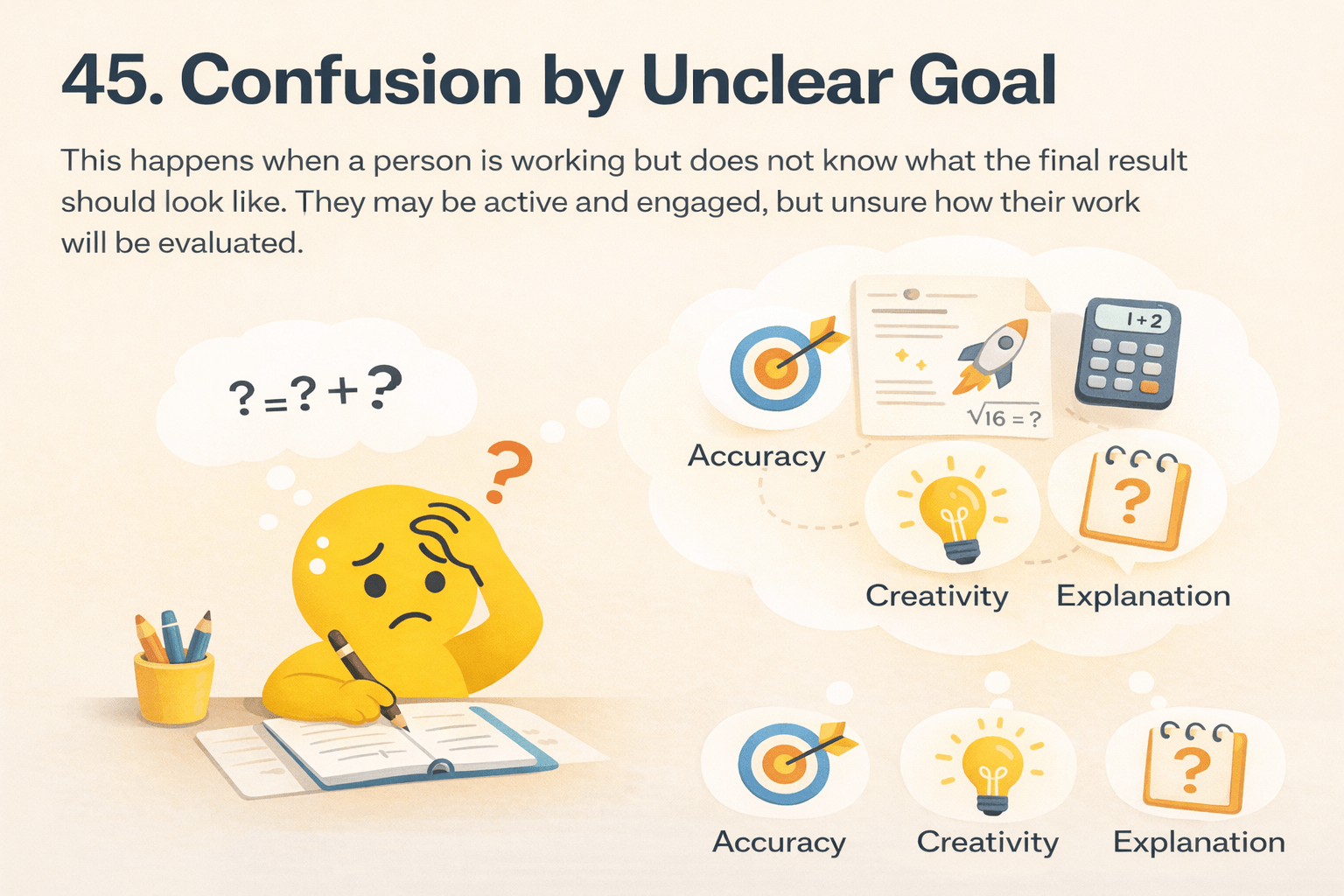
This happens when a person is working but does not know what the final result should look like. They may be active and engaged, but unsure how their work will be evaluated.
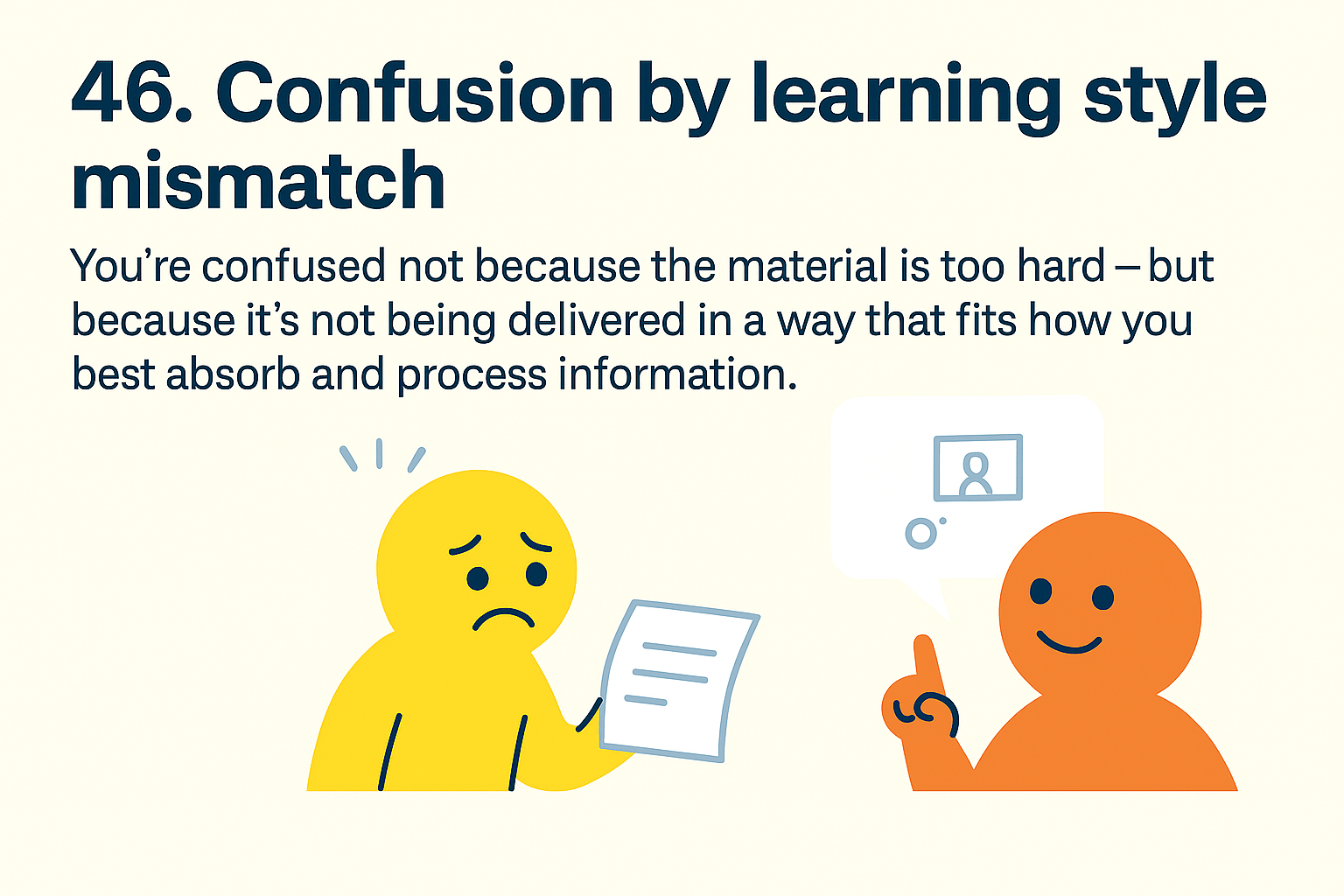
You’re confused not because the material is too hard—but because it’s not being delivered in a way that fits how you best absorb and process information.
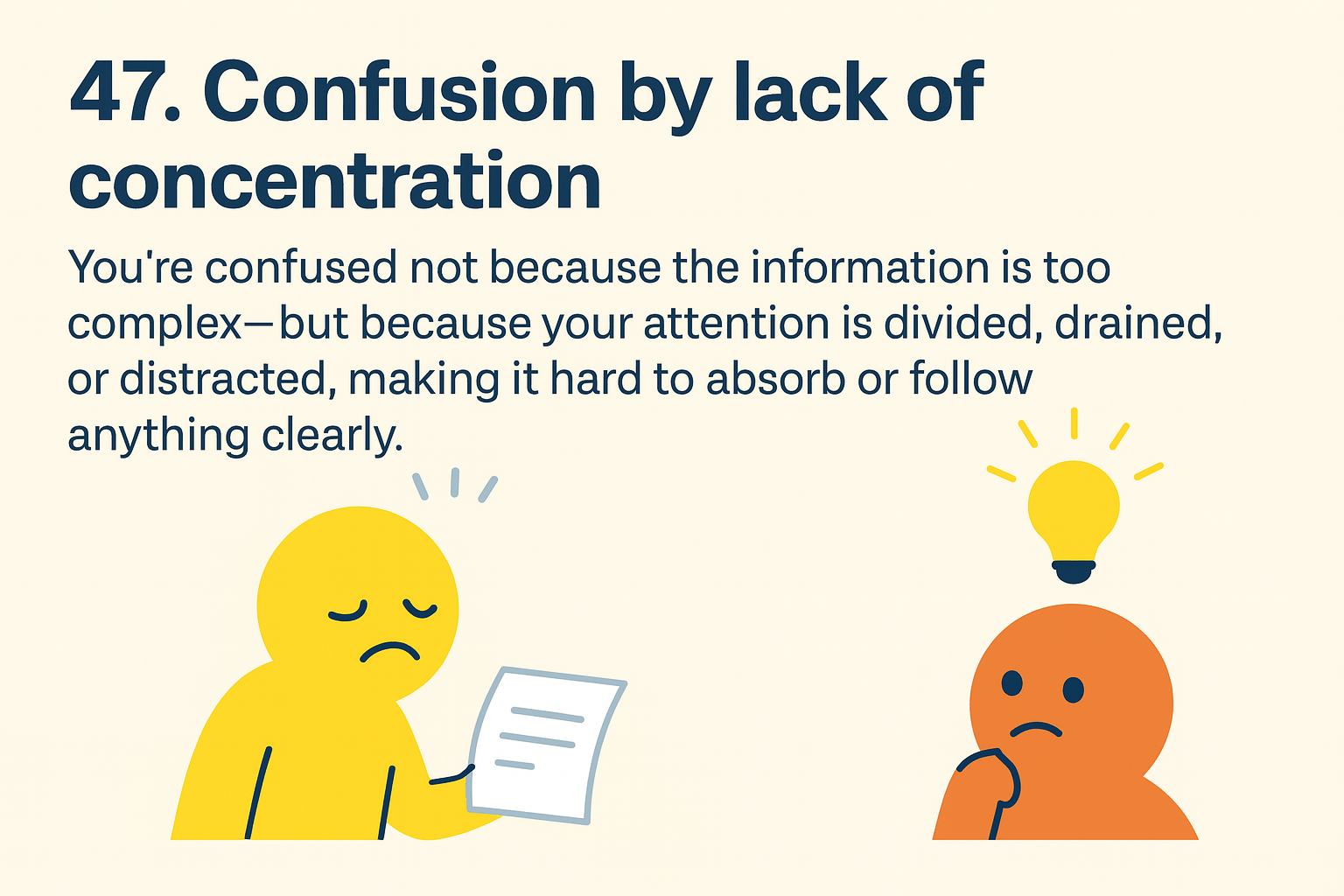
You’re confused not because the information is too complex—but because your attention is divided, drained, or distracted, making it hard to absorb or follow anything clearly.
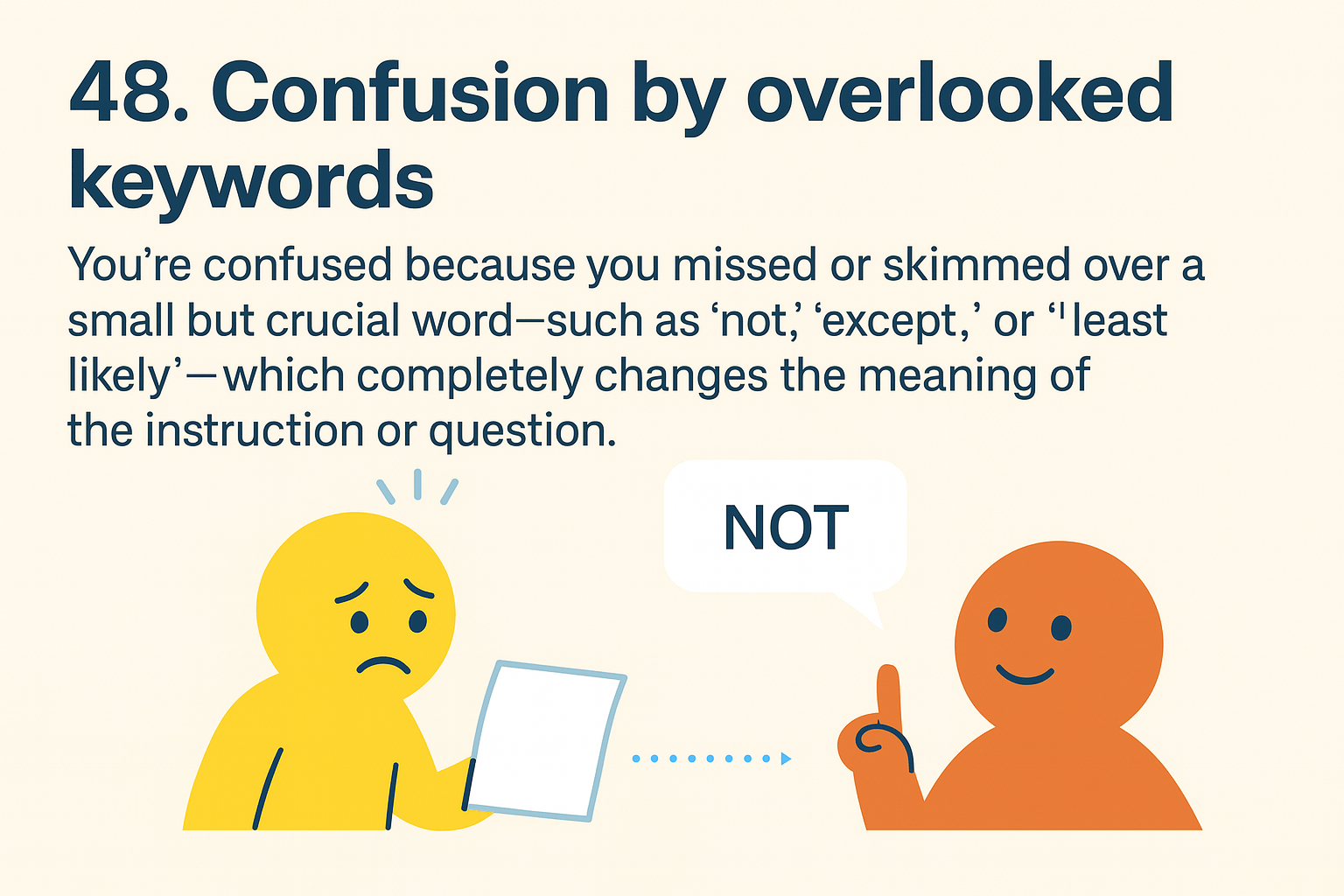
You’re confused because you missed or skimmed over a small but crucial word—such as ‘not,’ ‘except,’ or ‘least likely’—which completely changes the meaning of the instruction or question.
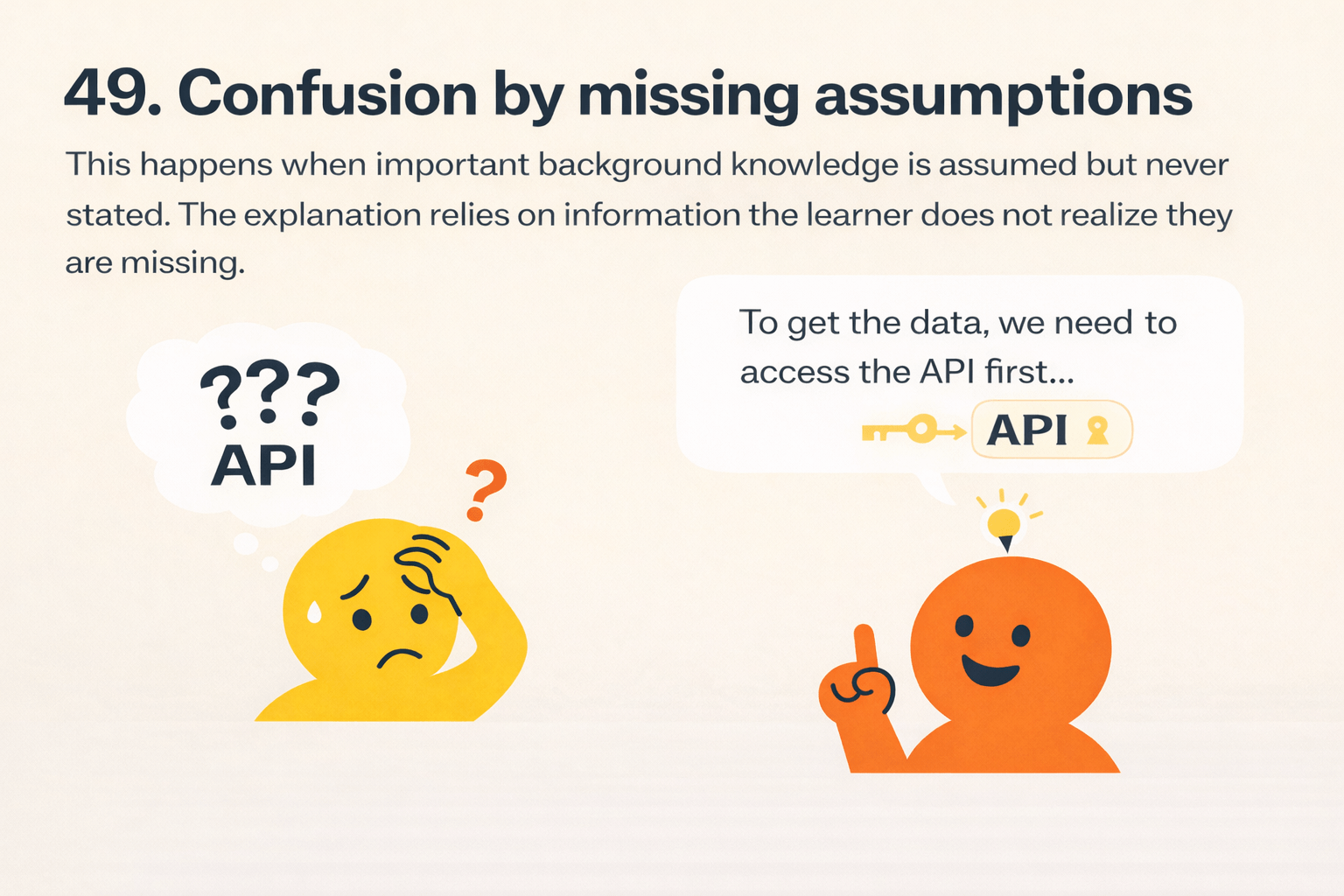
This happens when important background knowledge is assumed but never stated. The explanation relies on information the learner does not realize they are missing.
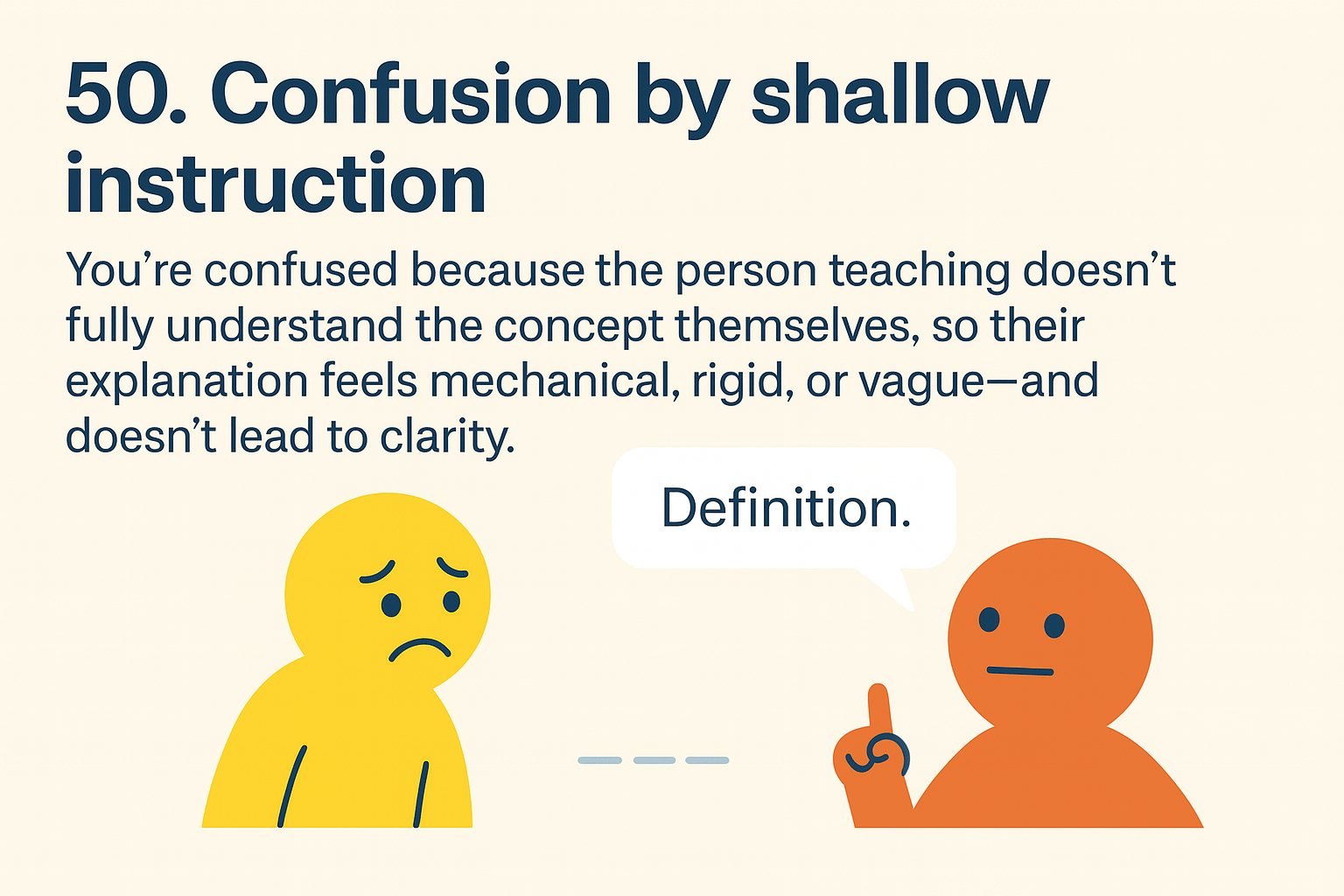
You’re confused because the person teaching doesn’t fully understand the concept themselves, so their explanation feels mechanical, rigid, or vague—and doesn’t lead to clarity.
Want the bold, social-friendly version of these tools? Check out IdiotMethod.com for edgy
posters, creator-focused content, and viral merch.