Clear Method IQ

Use it free. Share what helps.

Filter By Tags

tags filter

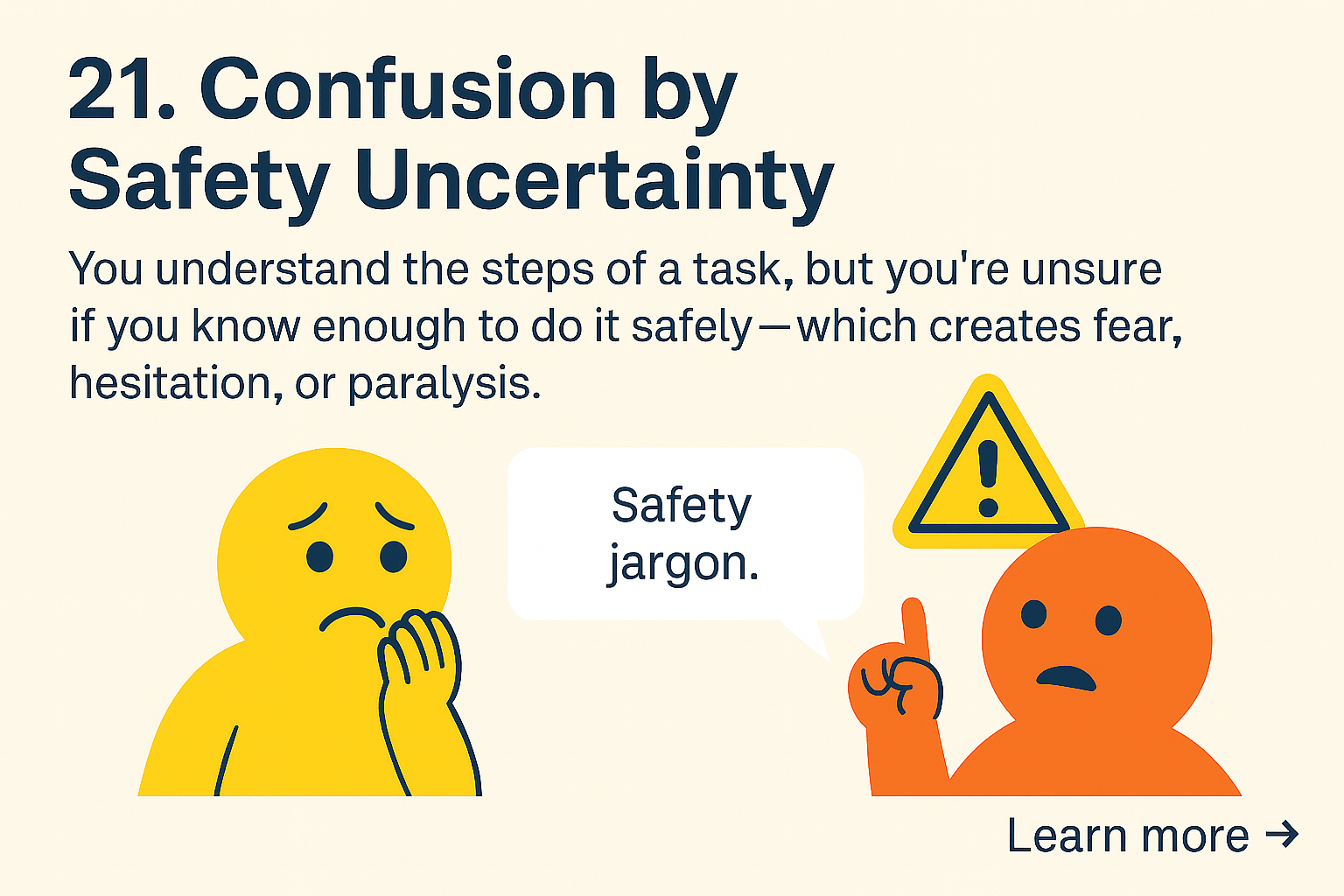
21. Confusion by Safety Uncertainty

You understand the steps of a task, but you’re unsure if you know enough to do it safely—which creates fear, hesitation, or paralysis.

You’ve watched how to jack up a car and change a tire, but you’re scared you might miss a safety step and cause the car to fall or hurt yourself.

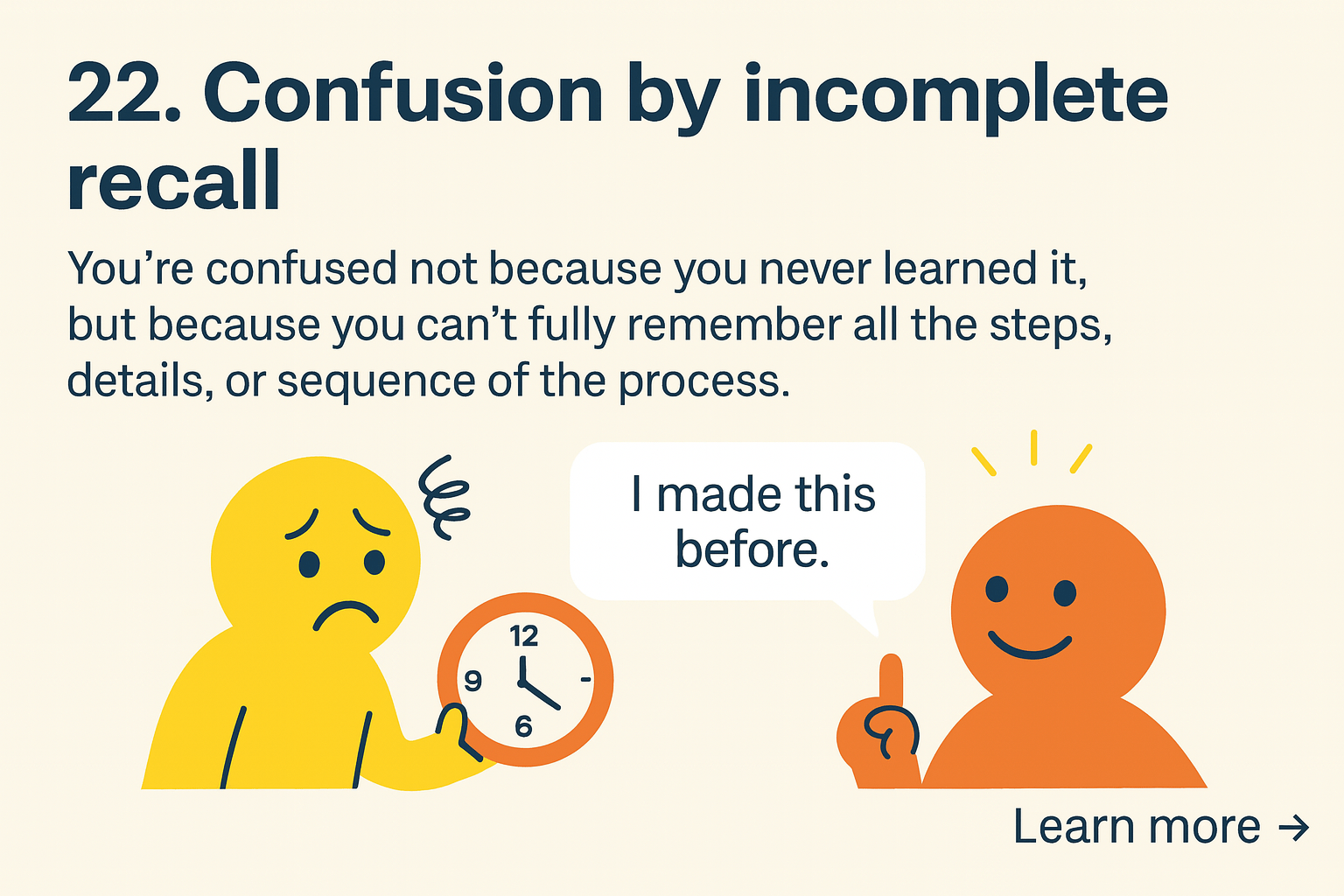
22. Confusion by Incomplete Recall

You’re confused not because you never learned it, but because you can’t fully remember all the steps, details, or sequence of the process.

You’re trying to follow a recipe you’ve used before, but forget when to add the eggs—or you remember how to log into a system, but forget one key security step and get stuck.

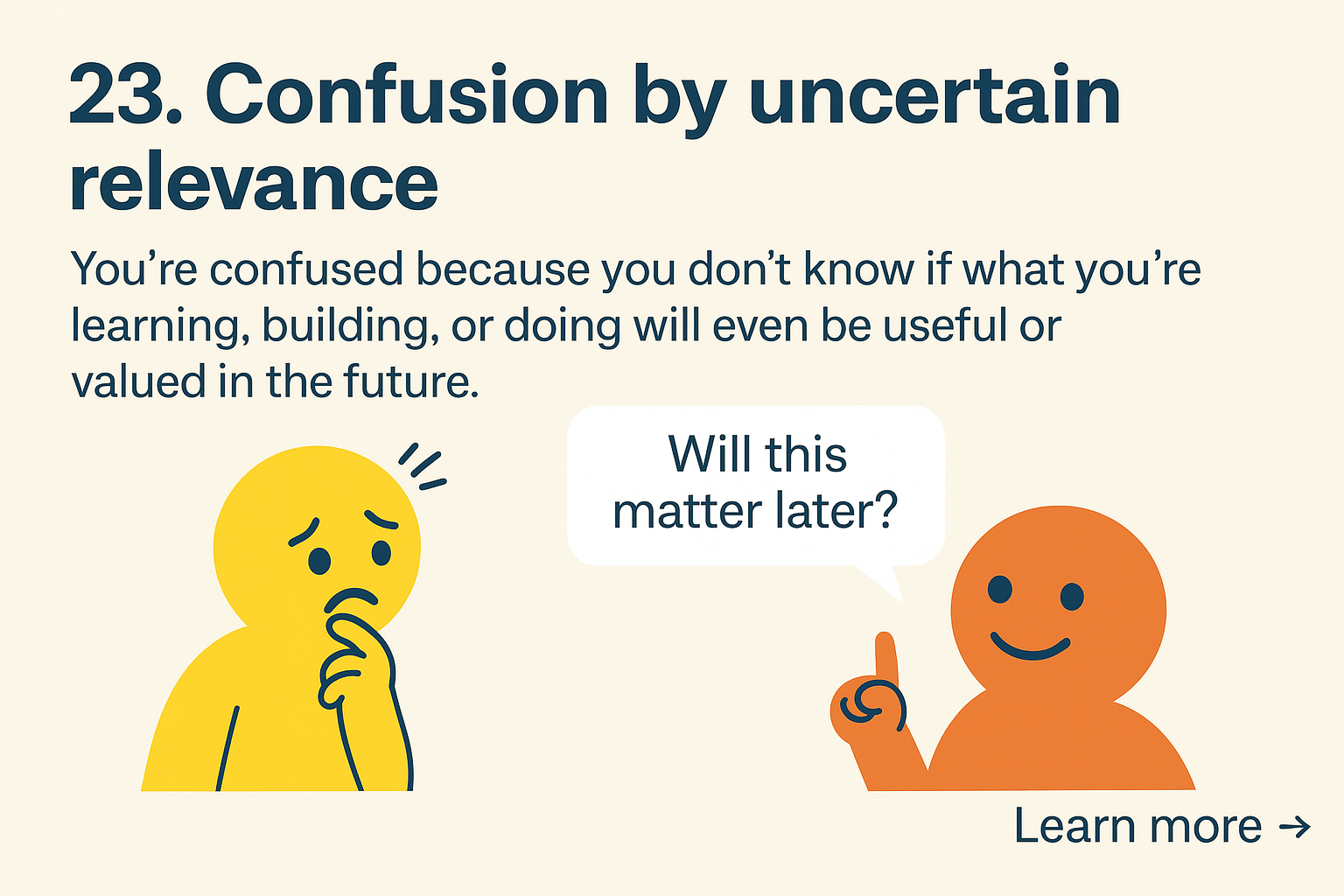
23. Confusion by Uncertain Relevance

You’re confused because you don’t know if what you’re learning, building, or doing will even be useful or valued in the future.

A student studies accounting but hears AI tools might replace 80% of the work—now they question if their path still matters.

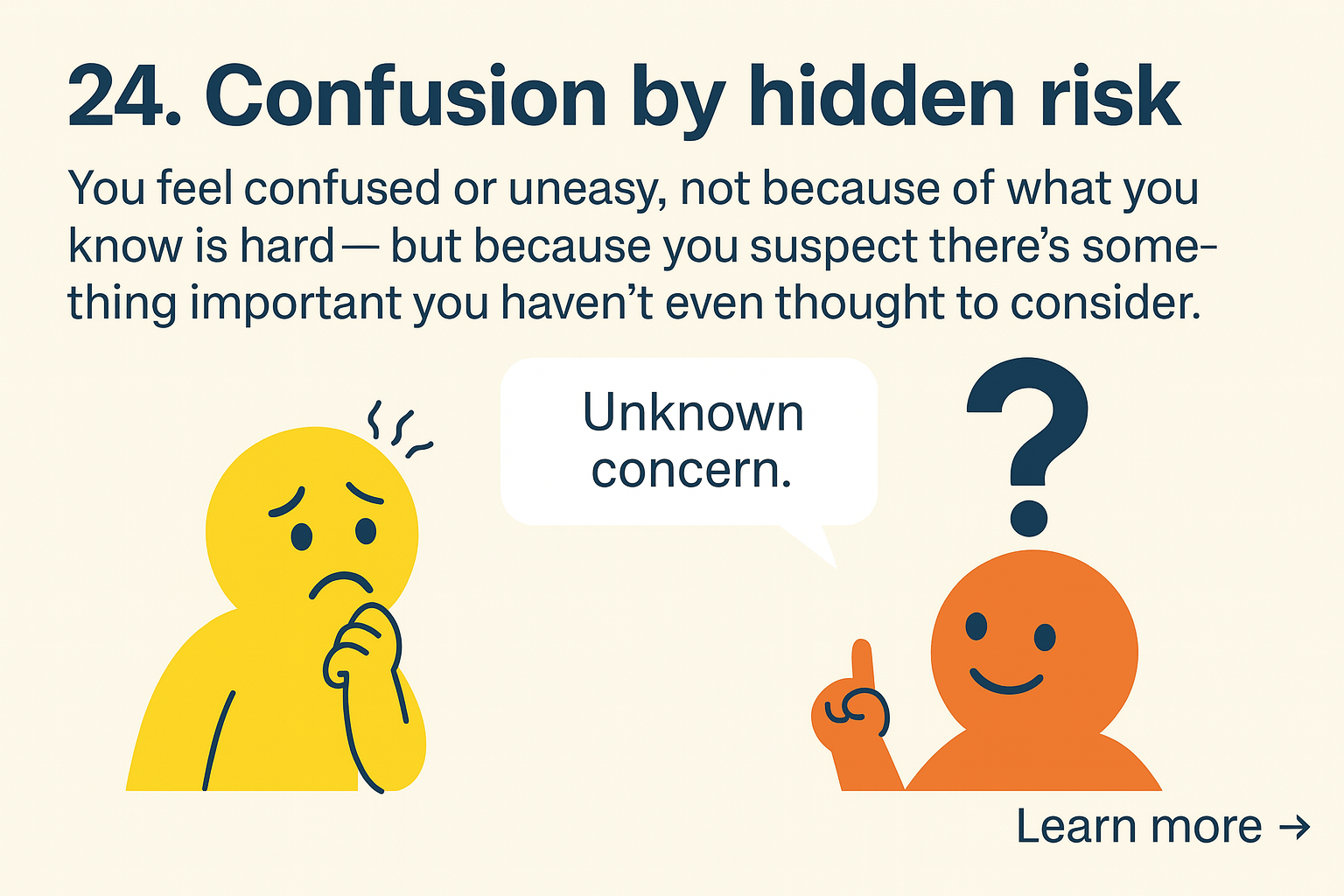
24. Confusion by Hidden Risk

You feel confused or uneasy, not because of what you know is hard—but because you suspect there’s something important you haven’t even thought to consider.

You’re opening a restaurant, and even though you've followed a checklist, you have a gut feeling there’s some legal, logistical, or operational thing you're unaware of—and it could cause a major issue later.

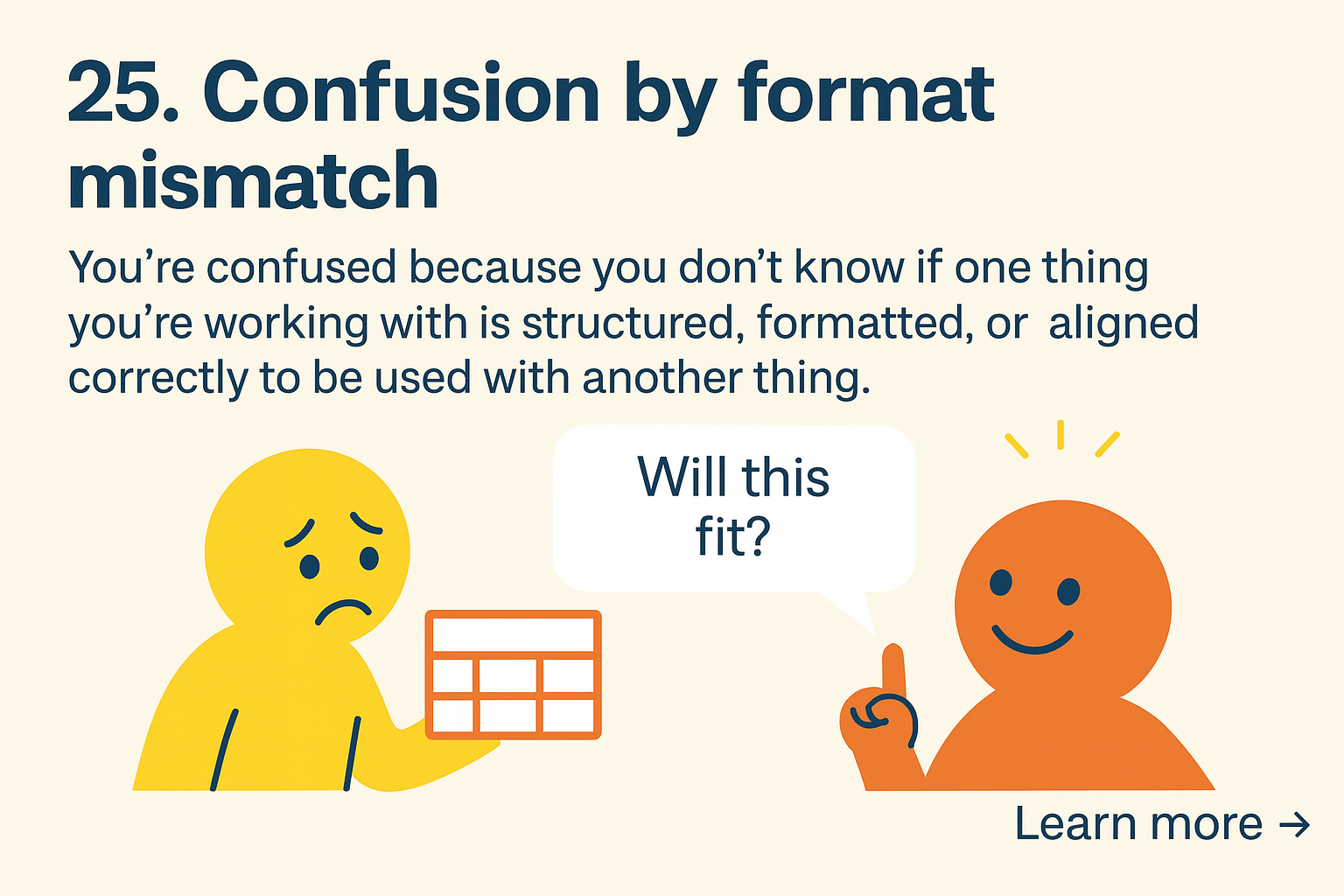
25. Confusion by Format Mismatch

You’re confused because you don’t know if one thing you’re working with is structured, formatted, or aligned correctly to be used with another thing.

You’re building a spreadsheet, but you’re not sure what columns are expected by a software system or import tool, so you’re guessing the structure and hoping it works.

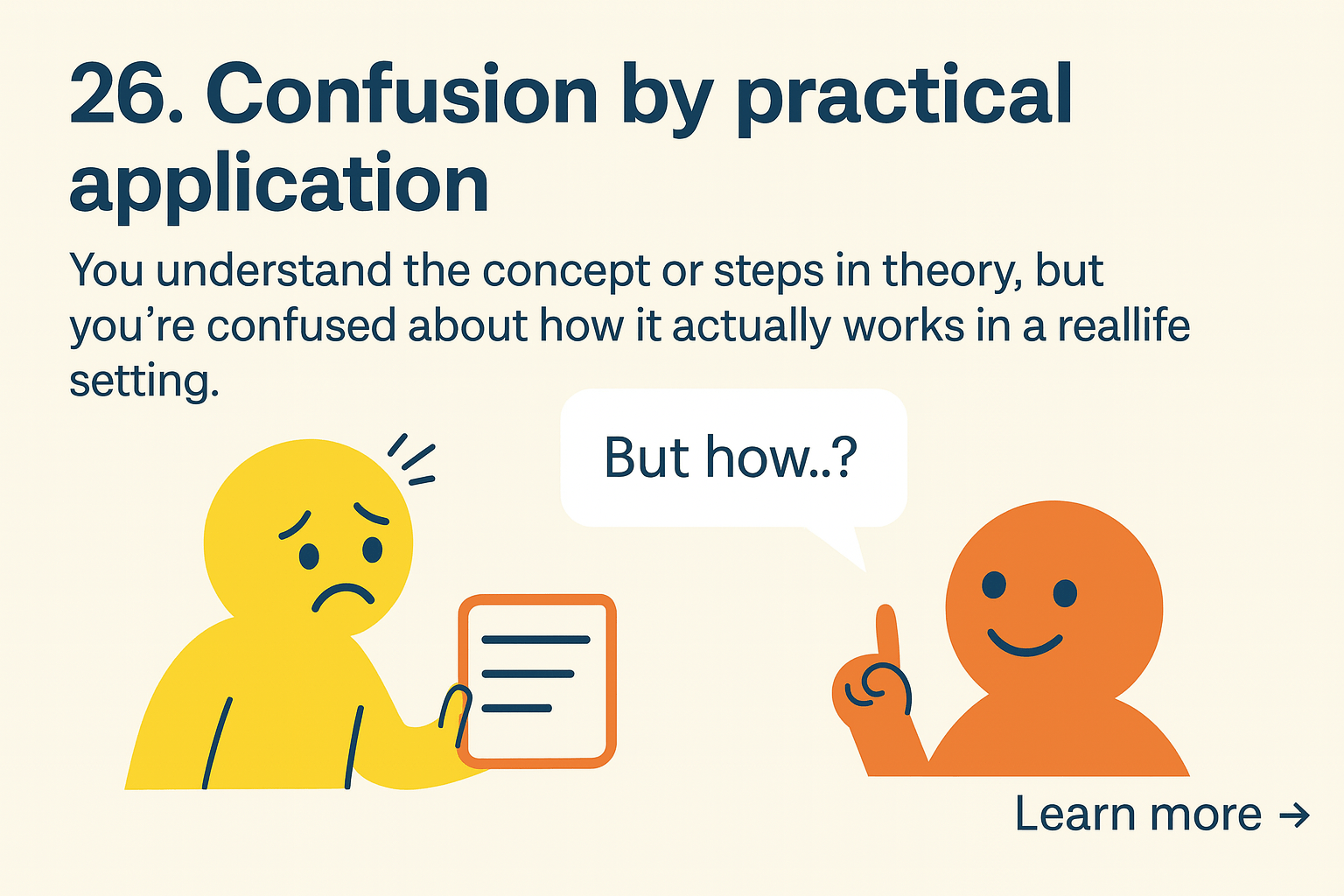
26. Confusion by Practical Application

You understand the concept or steps in theory, but you’re confused about how it actually works in a real-life setting.

You learn customer service scripts, but don’t know how to adapt them during a heated conversation. Or you understand budgeting in Excel, but don’t know how to stick to it day-to-day when life gets unpredictable.

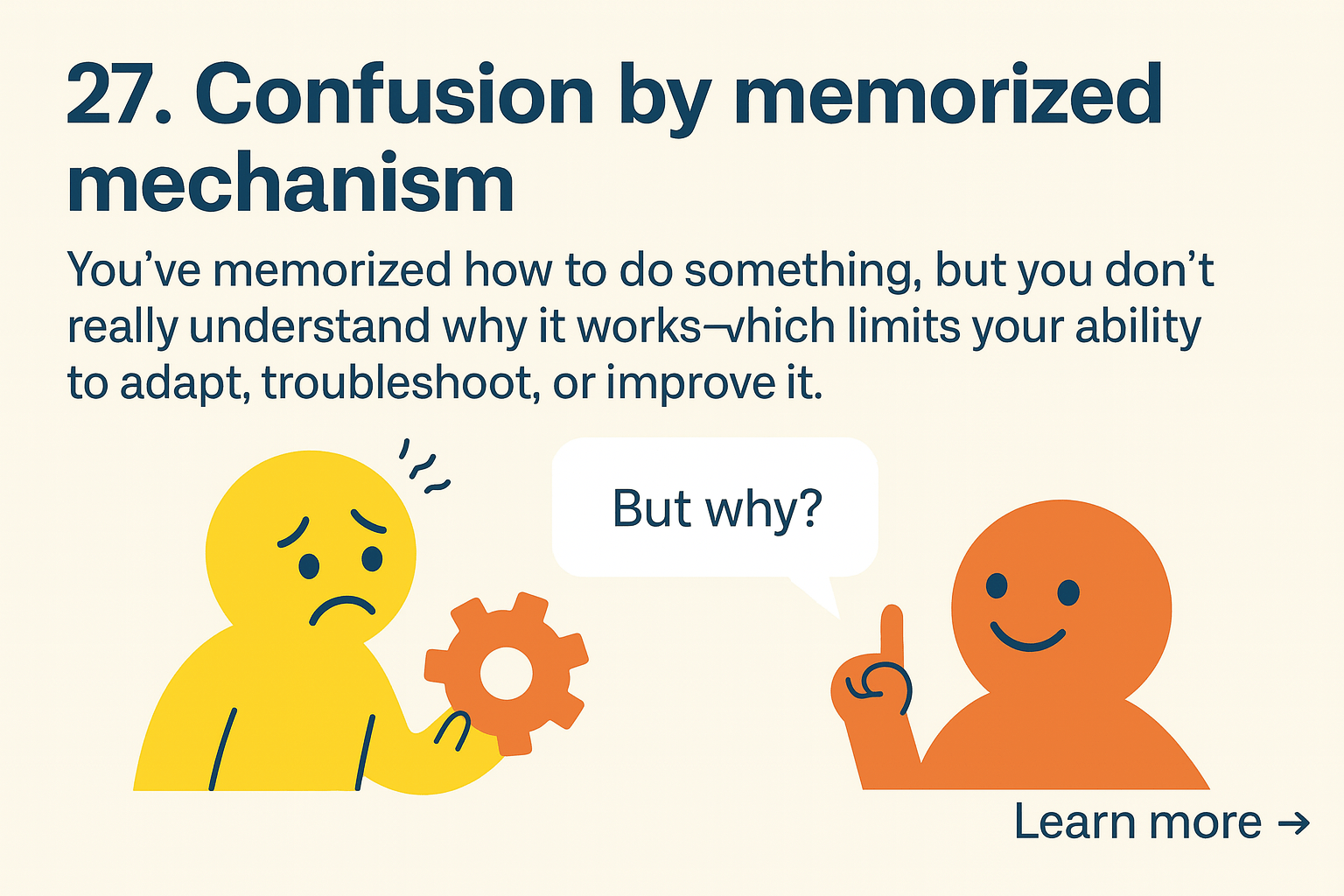
27. Confusion by Memorized Mechanism

You’ve memorized how to do something, but you don’t really understand why it works—which limits your ability to adapt, troubleshoot, or improve it.

You know how to rebuild an engine exactly like you were taught—but if one part changes or breaks unexpectedly, you’re stuck because you don’t understand the underlying system.

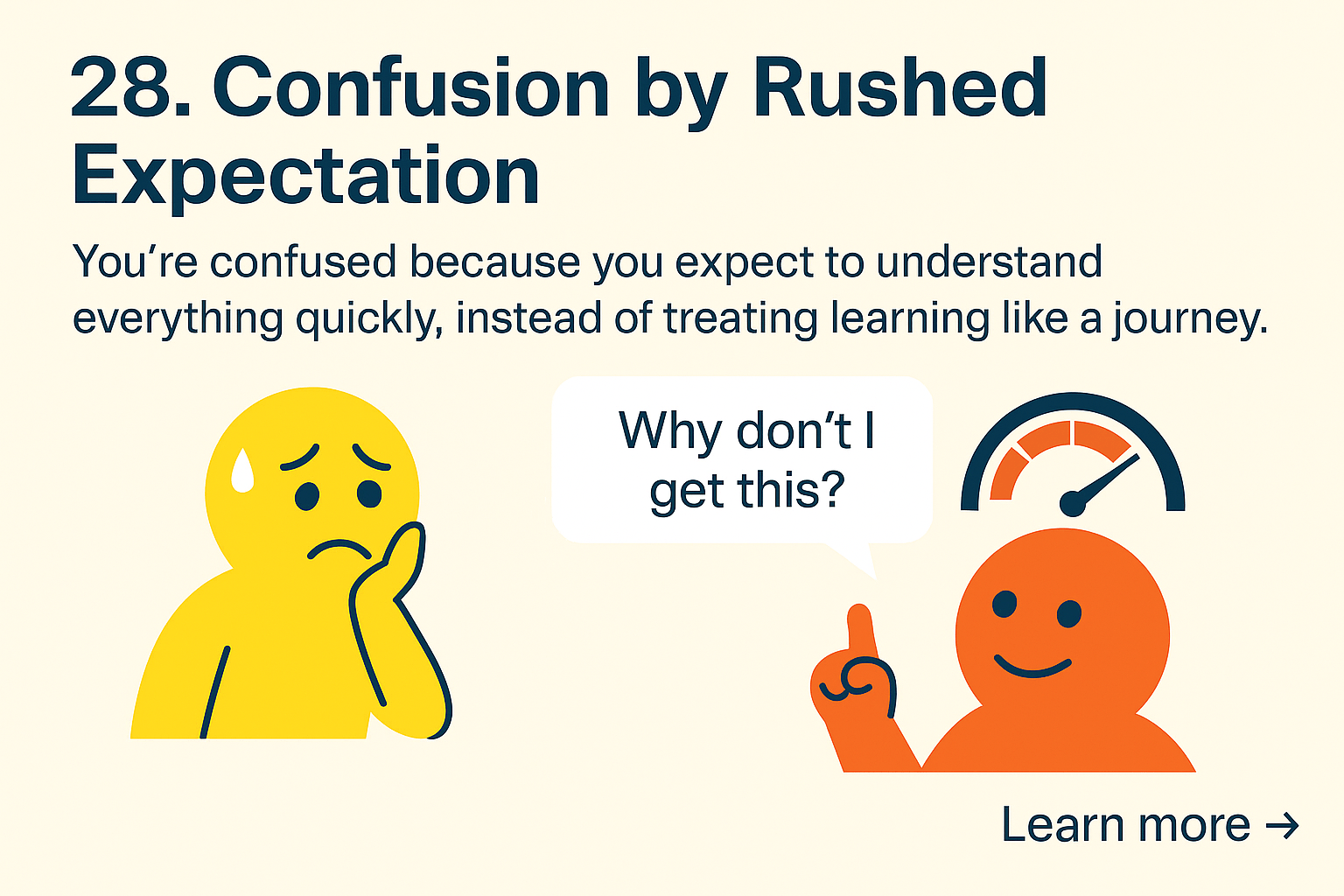
28. Confusion by Rushed Expectation

You’re confused because you expect to understand everything quickly, instead of treating learning like a journey. The rush to “get it” blinds you to the slow-building nature of real comprehension.

You try to learn programming in a day and get frustrated when it doesn’t click immediately, even though it takes most people weeks or months to grasp the fundamentals. Welcome to the practice of Claritology—the intentional study and understanding of personal confusion in order to reach deeper clarity. This guide is part of an open-source journey into self-examination. You are encouraged to reflect, question, and even create your own types of confusion based on real experiences. The goal isn't perfection—it’s progress, self-awareness, and learning how to think more clearly about the things that cloud your understanding. Claritology invites you to pause, notice your fog, and turn confusion into fuel for insight.

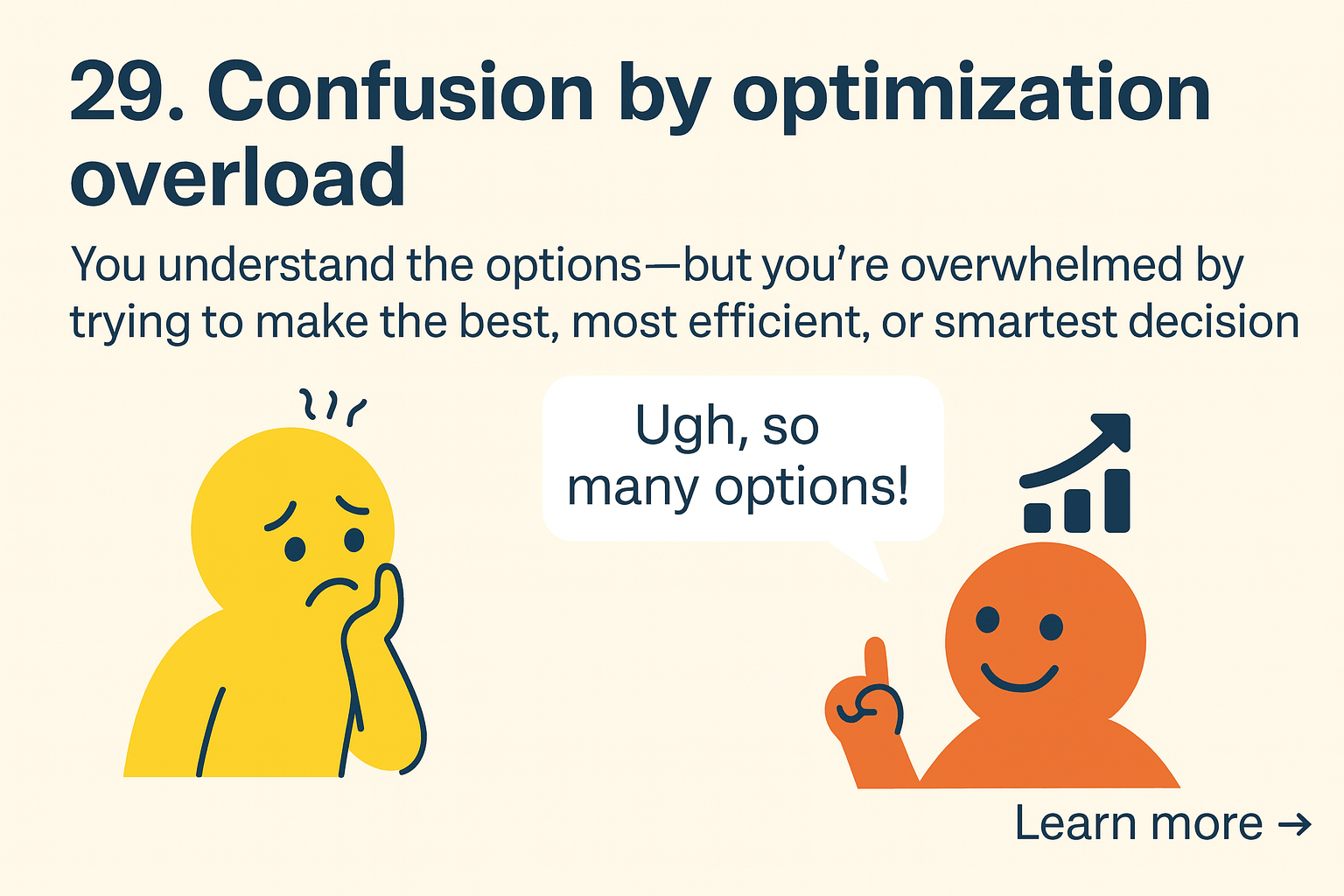
29. Confusion by Optimization Overload

You understand the options—but you’re overwhelmed by trying to make the best, most efficient, or smartest decision.

You’re comparing vehicles for purchase—new vs used, SUV vs hybrid, lease vs finance—and you know the pros and cons, but the fear of not making the most cost-effective choice paralyzes your decision.

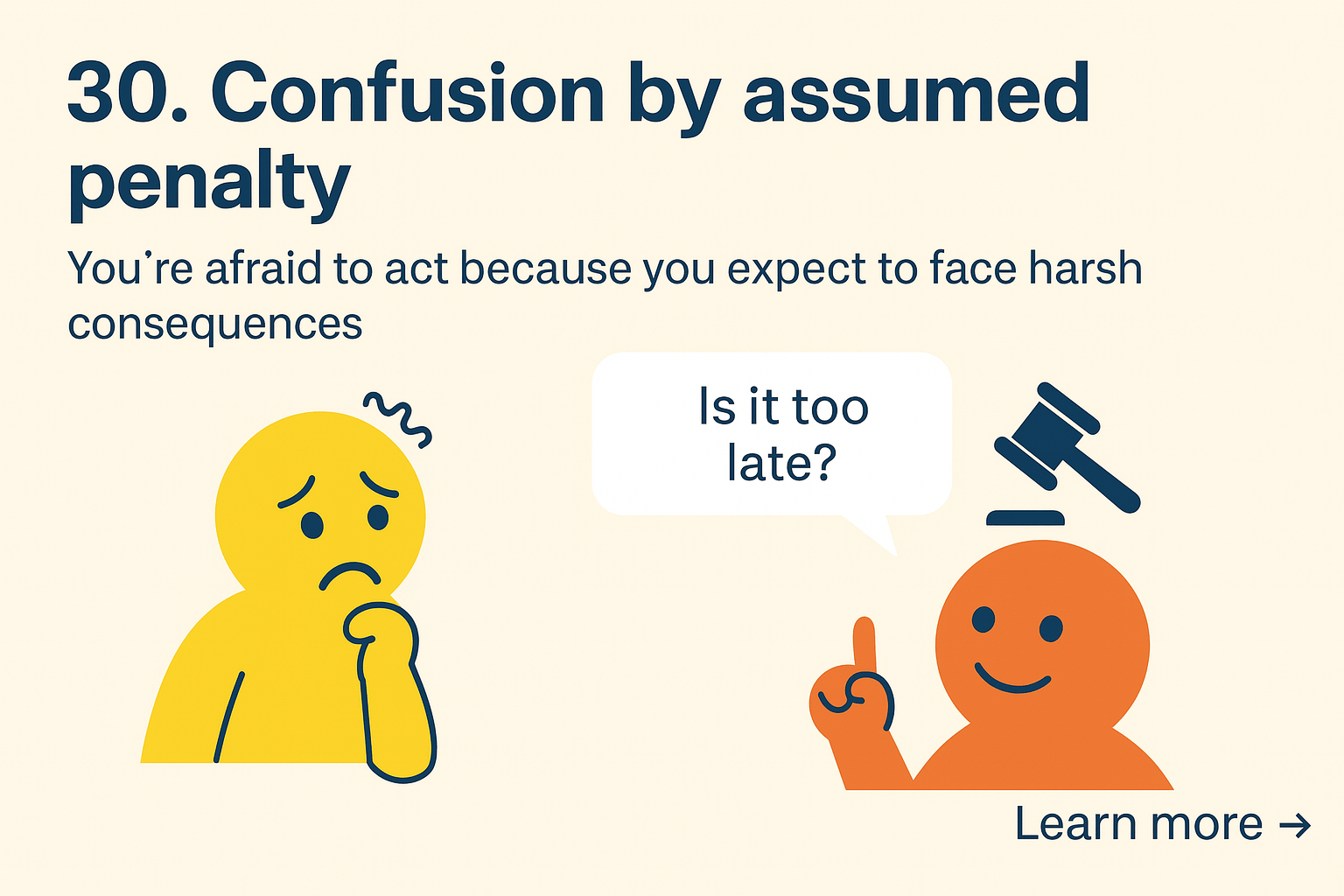
30. Confusion by Assumed Penalty

You avoid taking action or seeking clarity because you’ve already assumed the consequences are too big to face.

You have unpaid taxes or bills, but instead of calling to ask for help or set up a payment plan, you ghost the problem—believing it’s already too late to fix. This confusion is fueled by fear, shame, or assumptions about punishment—and it often turns small problems into bigger ones simply because they were never examined.

Want the bold, social-friendly version of these tools? Check out IdiotMethod.com for edgy
posters, creator-focused content, and viral merch.

You’re all set 🎉

Thanks for downloading—I hope this helps you or
your team.
I’m building this to create safer, smarter
environments where people feel comfortable asking questions.

If this was helpful and you’d like to support the work,
you can buy me a coffee 👇

No pressure—just glad you’re here.