Filter By Tags
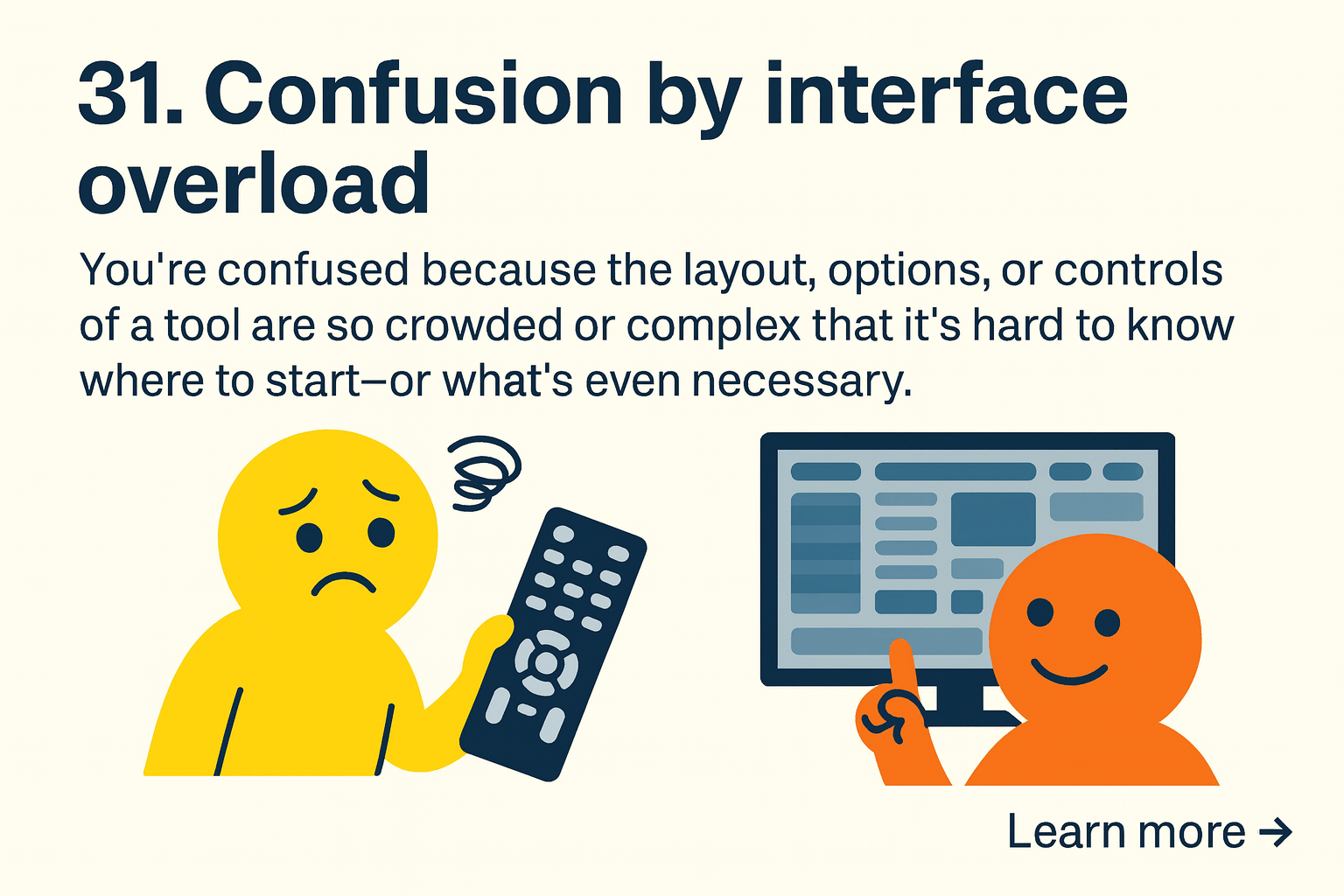
You’re confused because the layout, options, or controls of a tool are so crowded or complex that it’s hard to know where to start—or what’s even necessary.
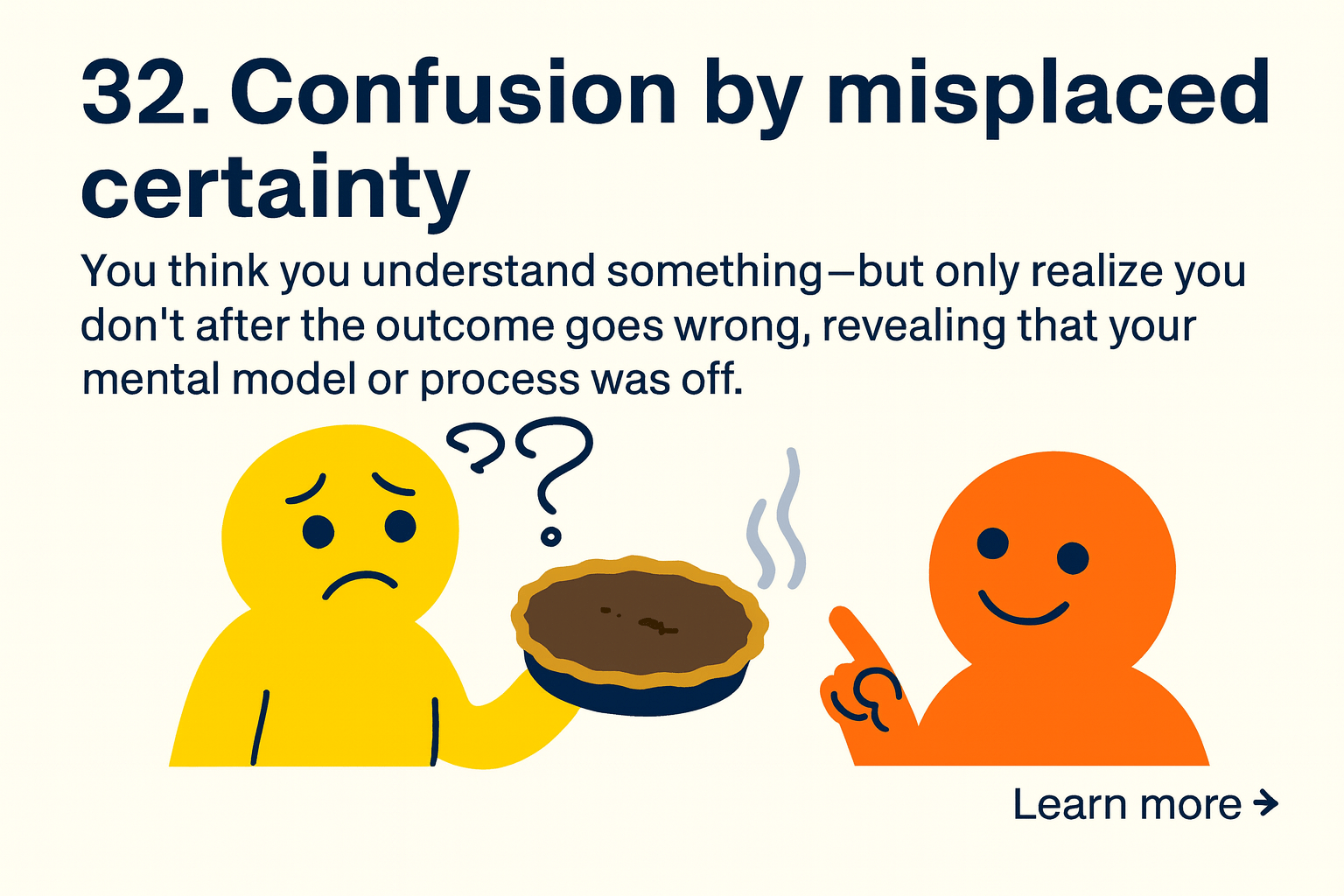
You think you understand something—but only realize you don’t after the outcome goes wrong, revealing that your mental model or process was off.
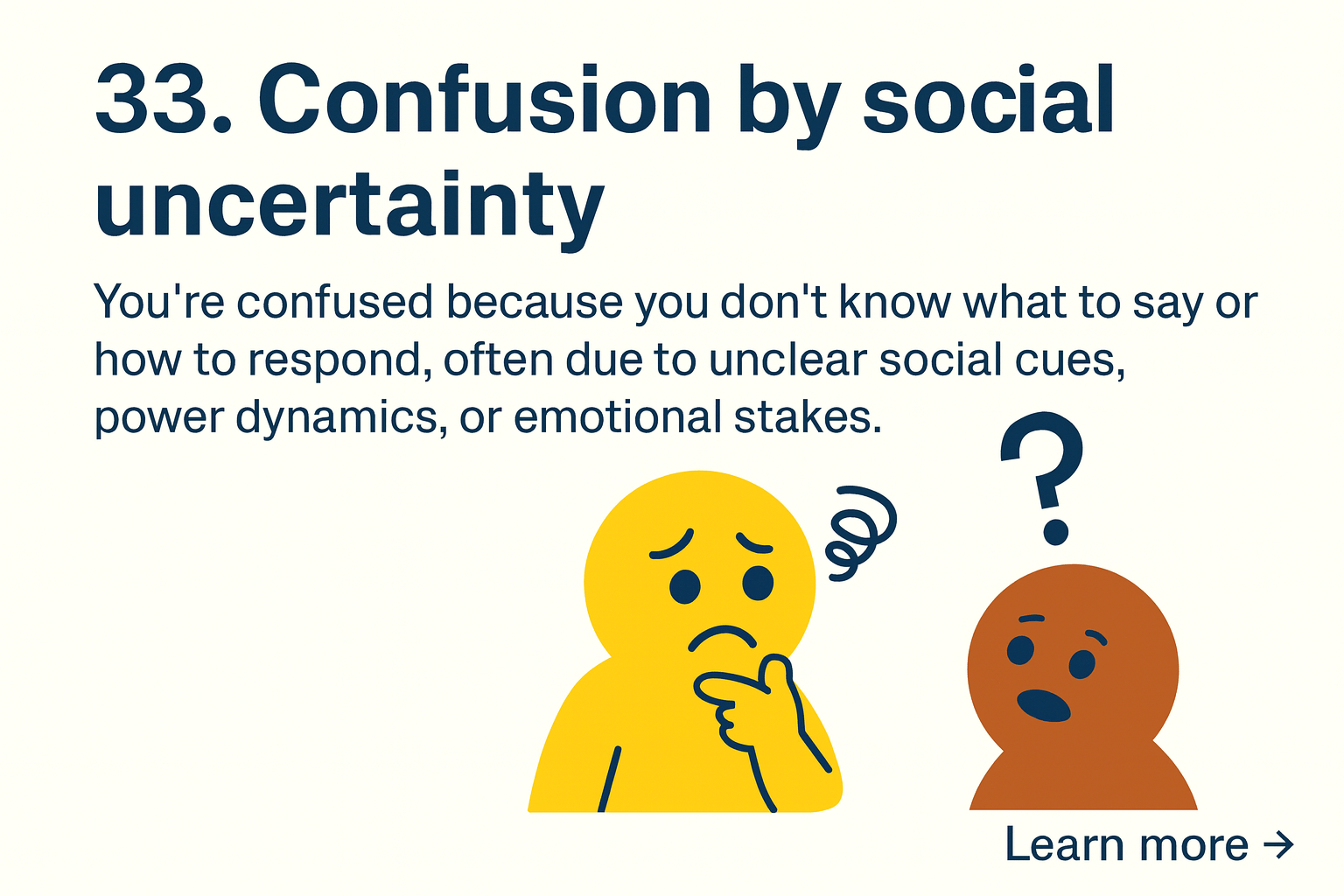
You’re confused because you don’t know what to say or how to respond, often due to unclear social cues, power dynamics, or emotional stakes.
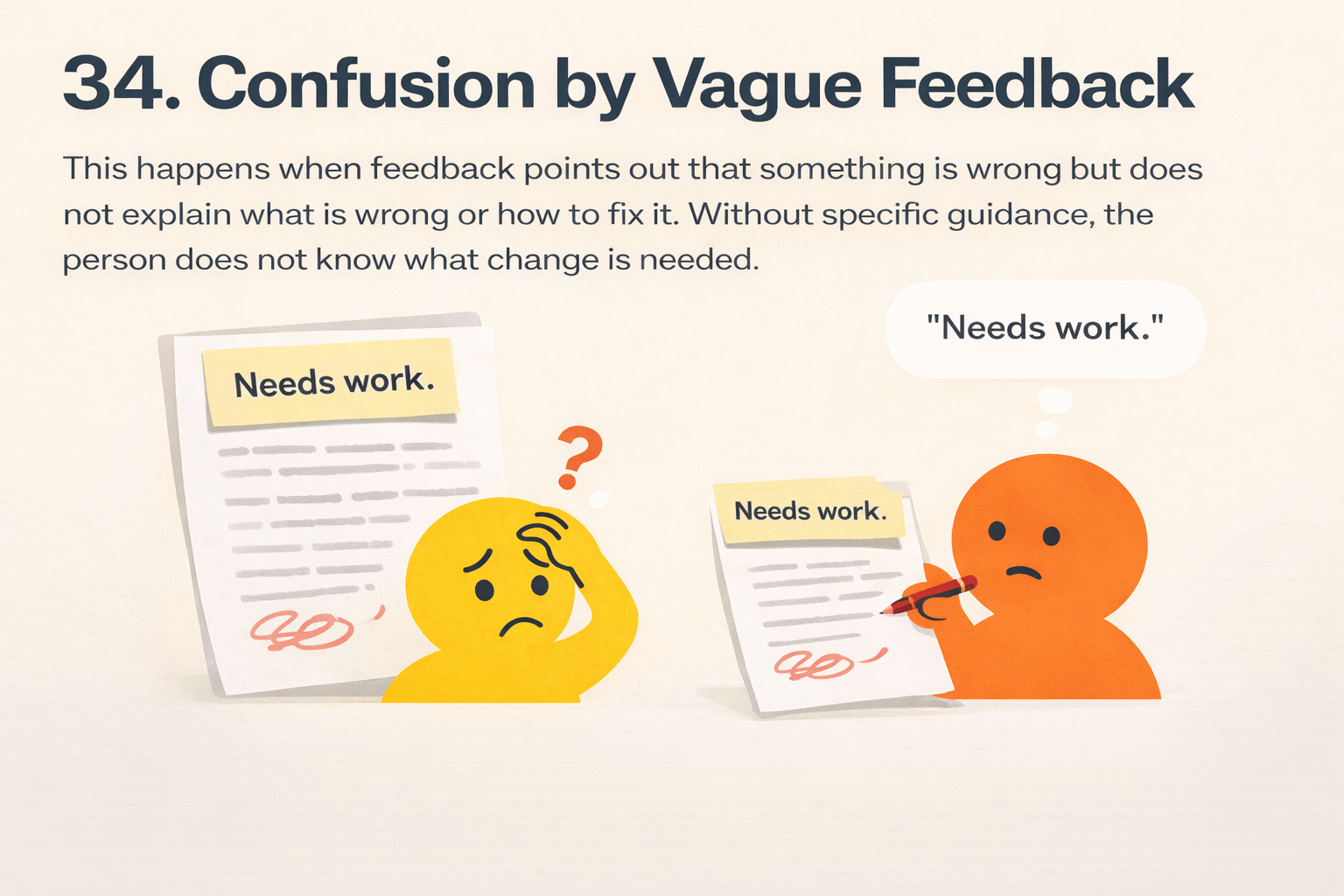
This happens when feedback points out that something is wrong but does not explain what is wrong or how to fix it. Without specific guidance, the person does not know what change is needed.
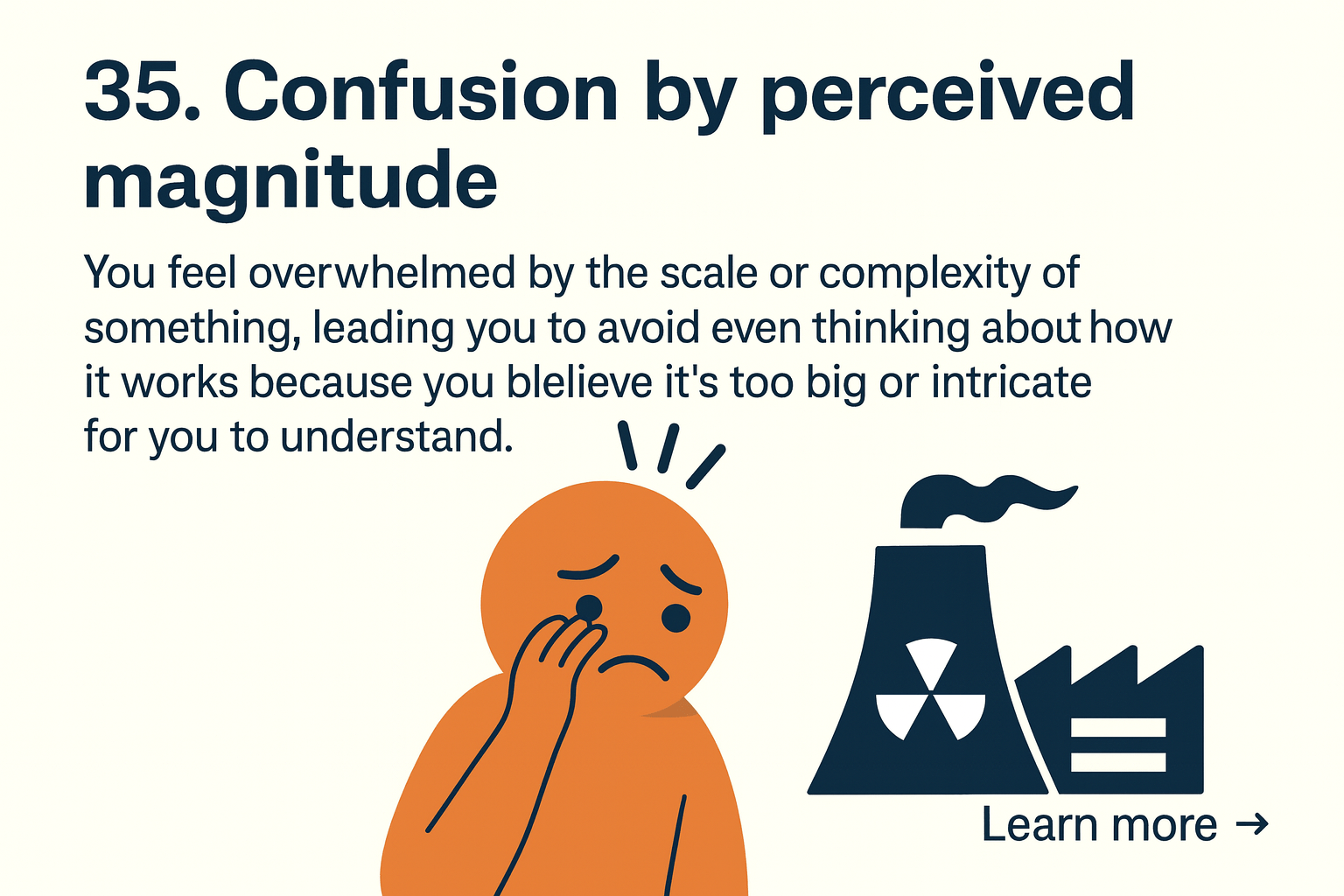
You feel overwhelmed by the scale or complexity of something, leading you to avoid even thinking about how it works because you believe it’s too big or intricate for you to understand.
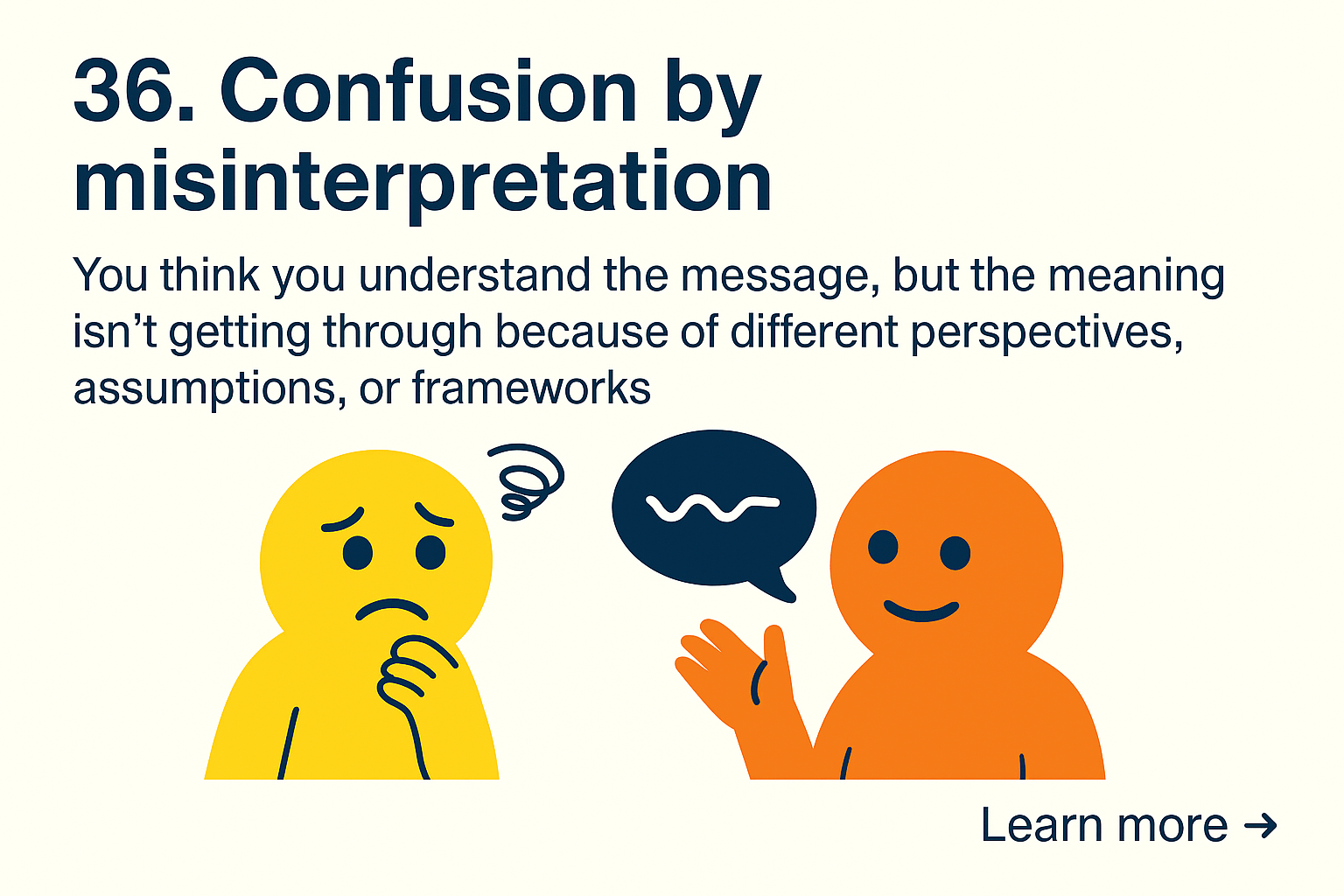
You think you understand the message, but the meaning isn’t getting through because of different perspectives, assumptions, or frameworks—like trying to speak in two languages but neither party understands the other.
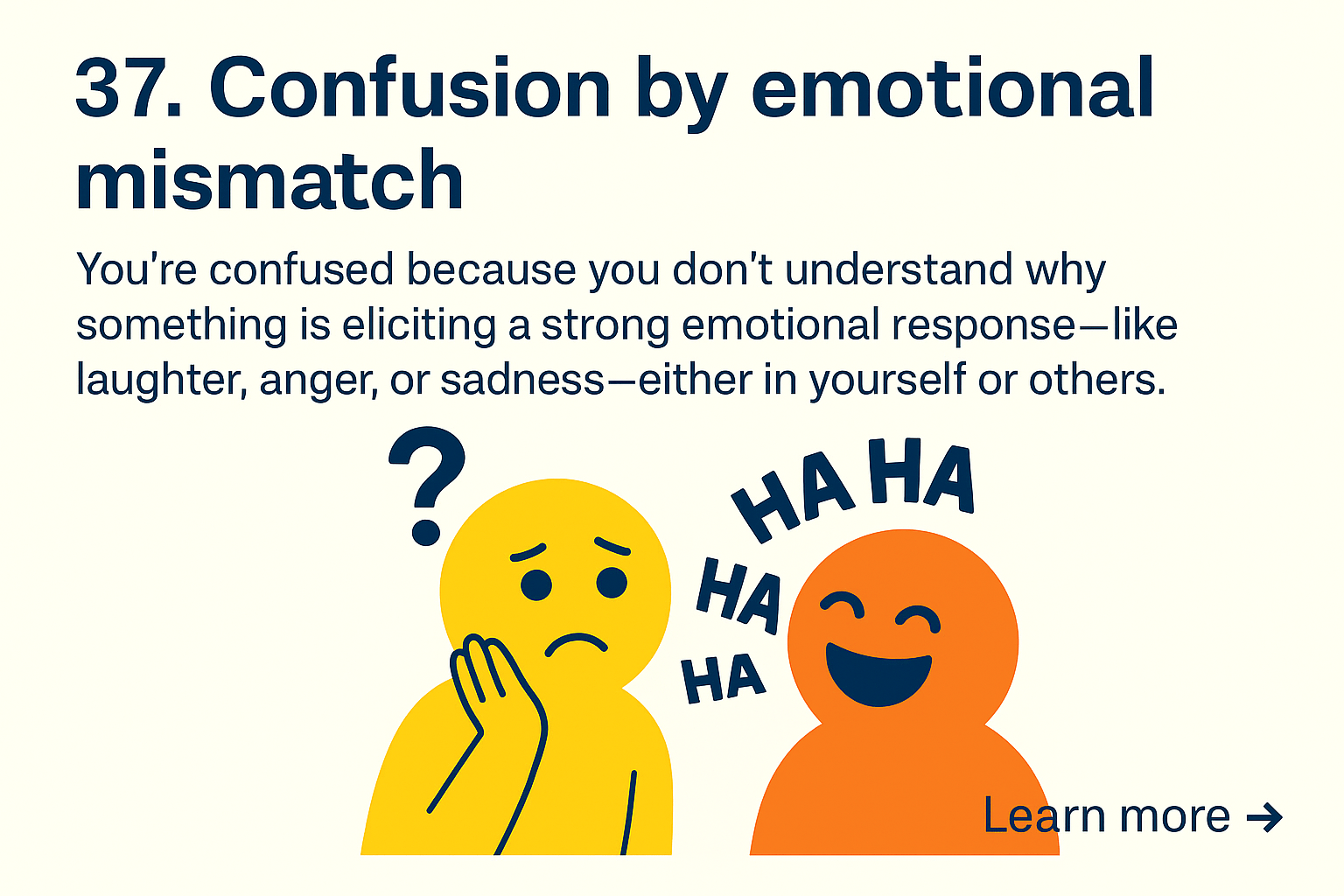
You’re confused because you don’t understand why something is eliciting a strong emotional response—like laughter, anger, or sadness—either in yourself or others.
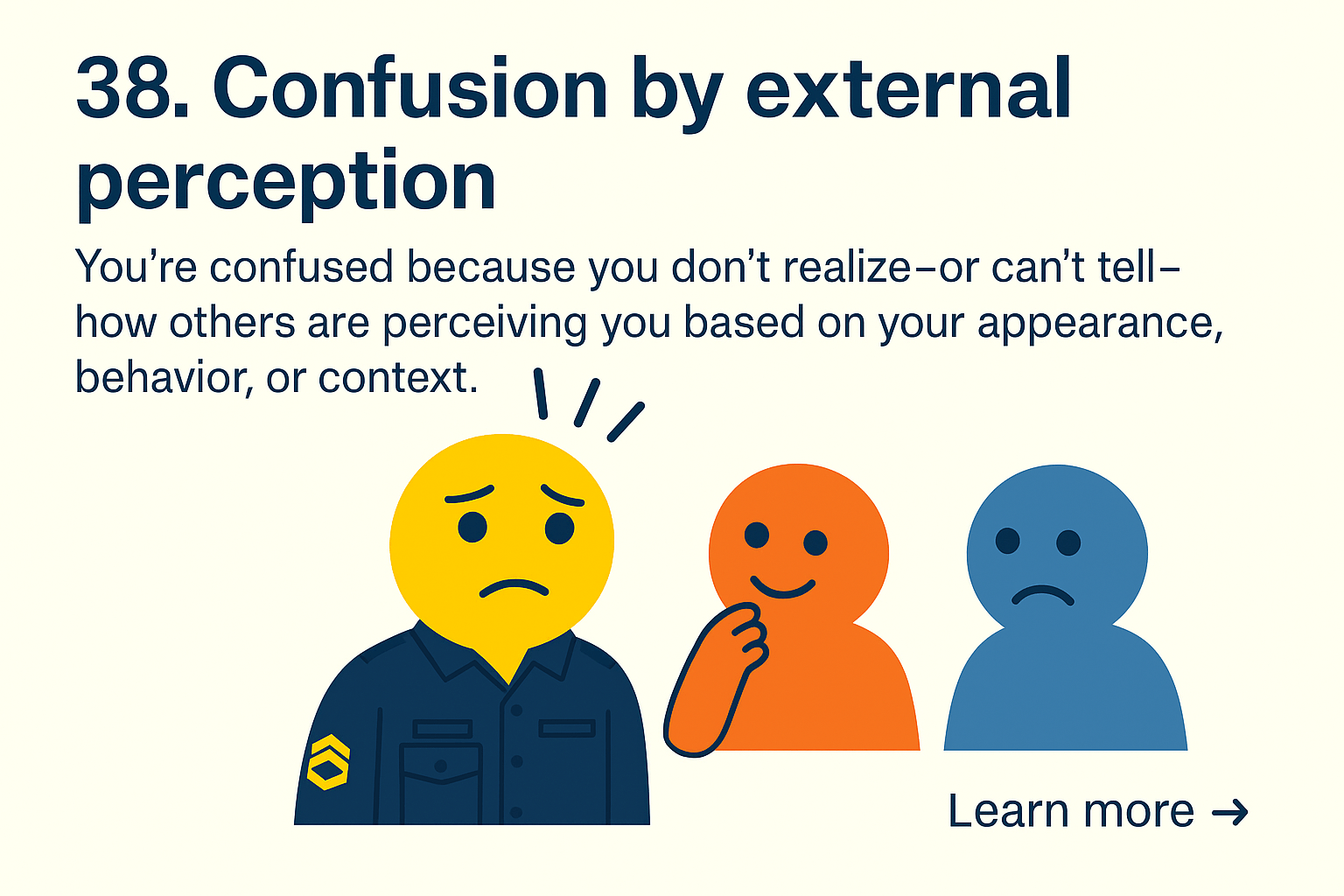
You’re confused because you don’t realize—or can’t tell—how others are perceiving you based on your appearance, behavior, or context.
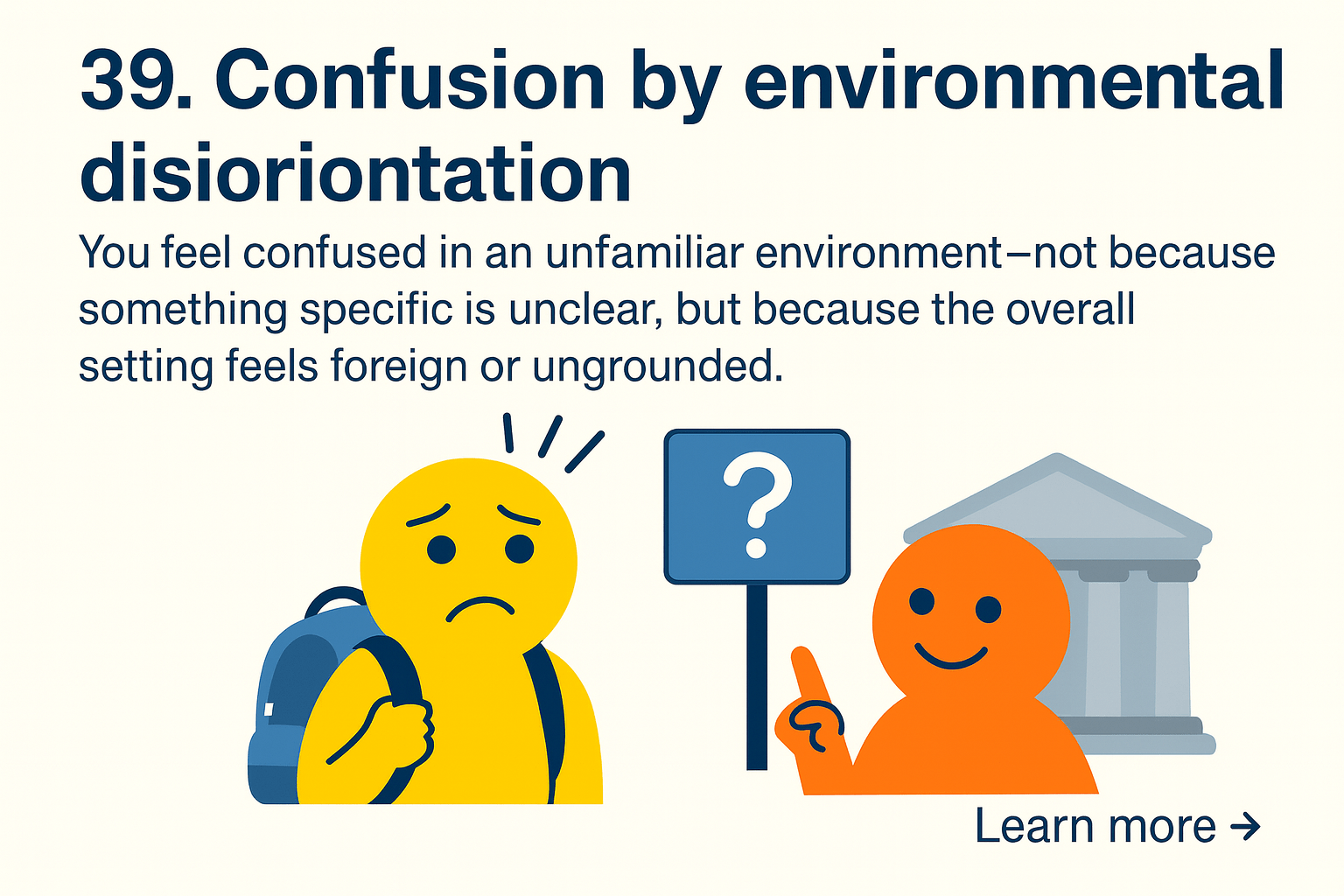
You feel confused in an unfamiliar environment—not because something specific is unclear, but because the overall setting feels foreign or ungrounded.
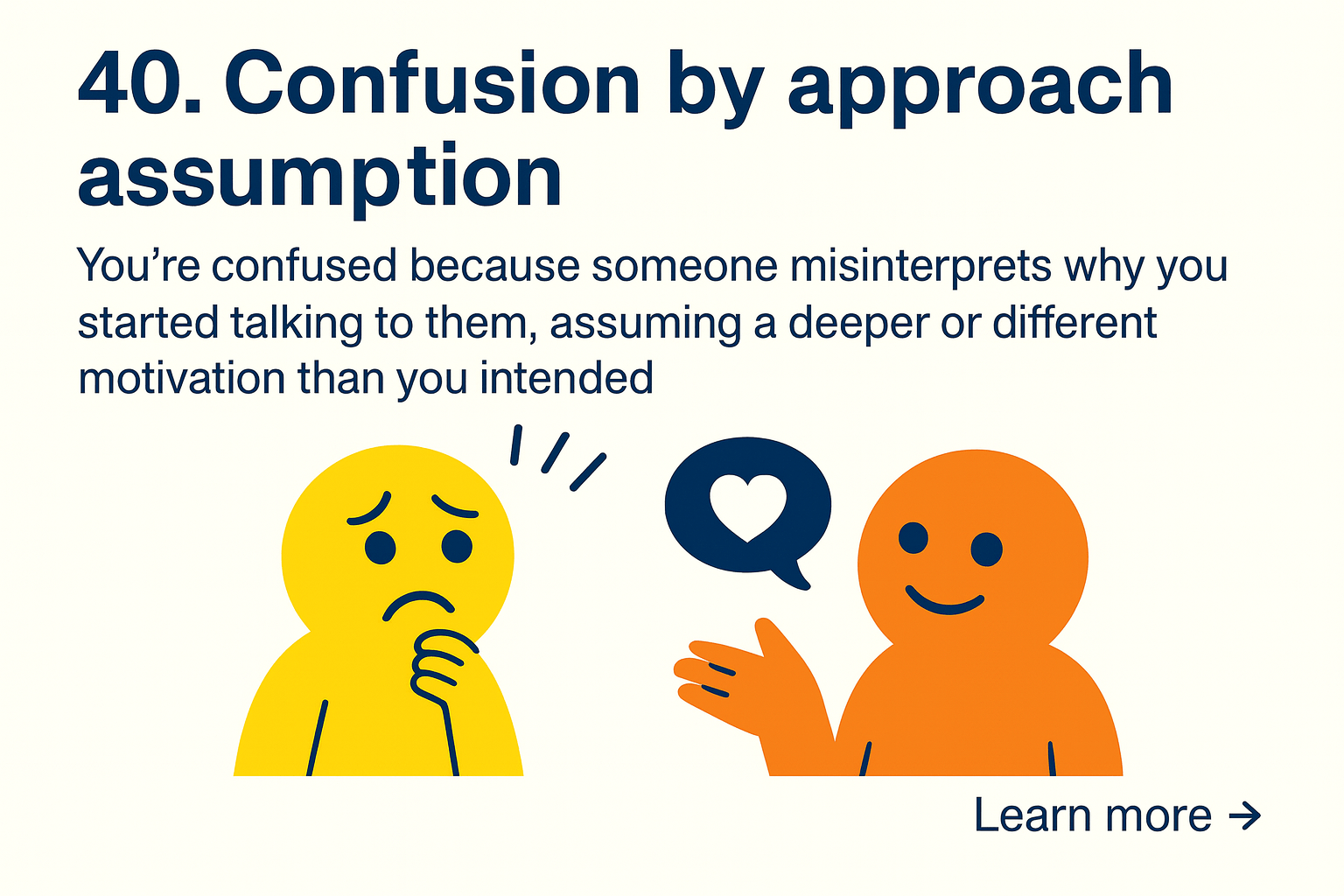
You’re confused because someone misinterprets why you started talking to them, assuming a deeper or different motivation than you intended
Want the bold, social-friendly version of these tools? Check out IdiotMethod.com for edgy
posters, creator-focused content, and viral merch.